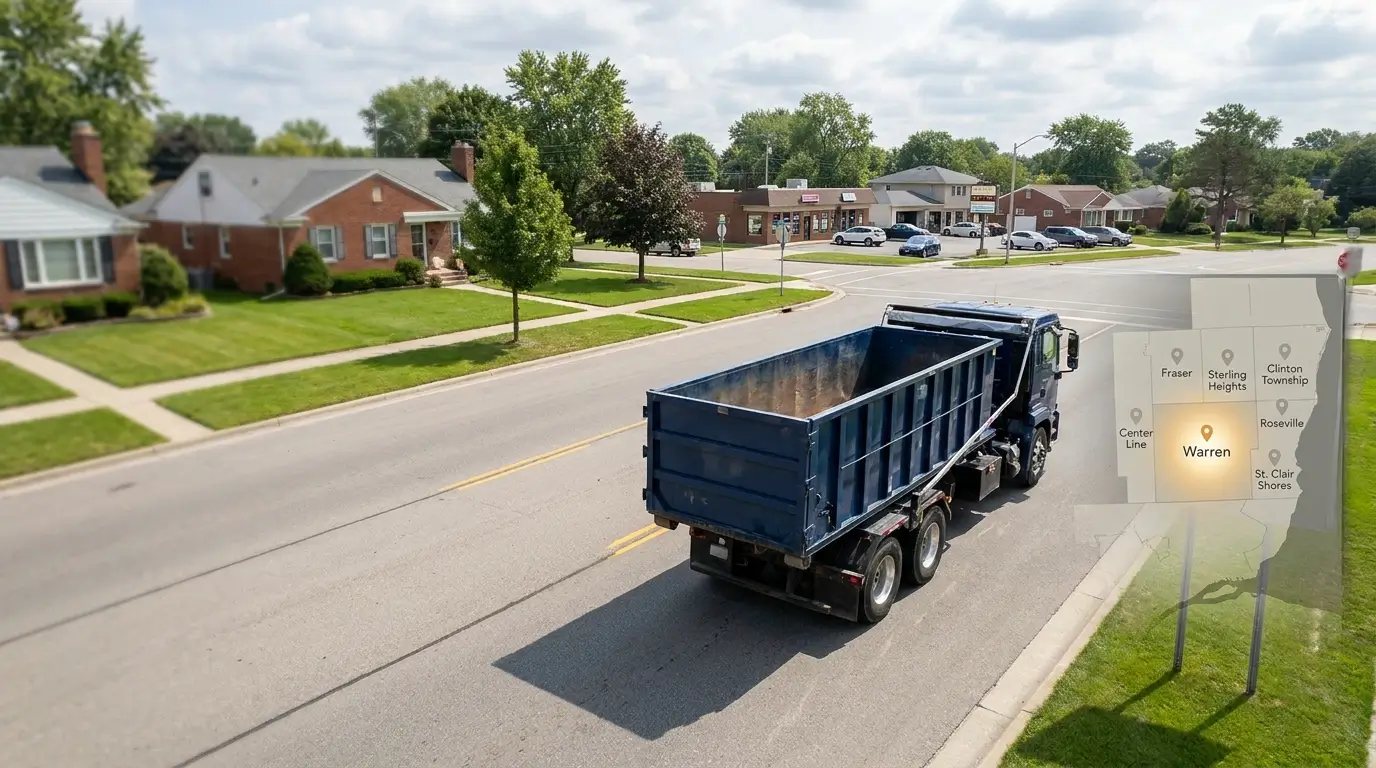
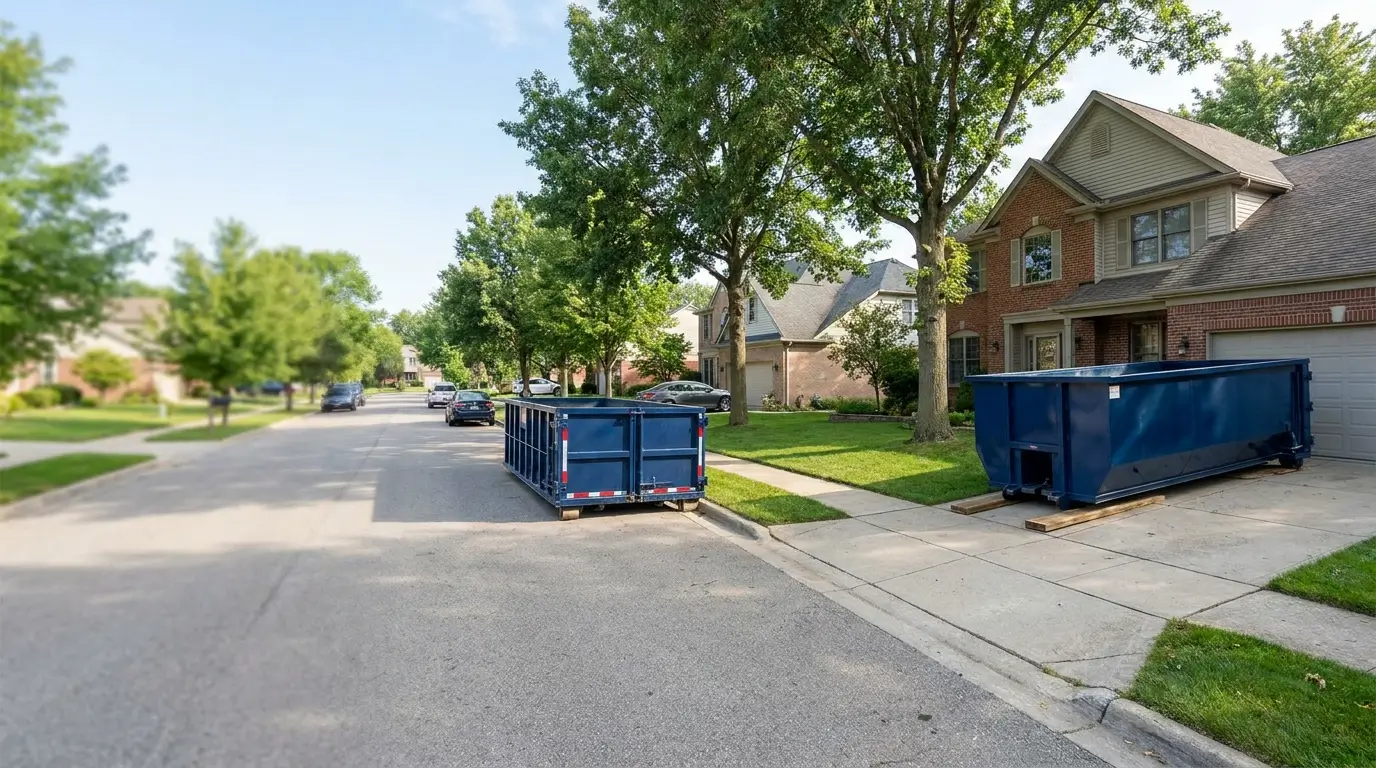
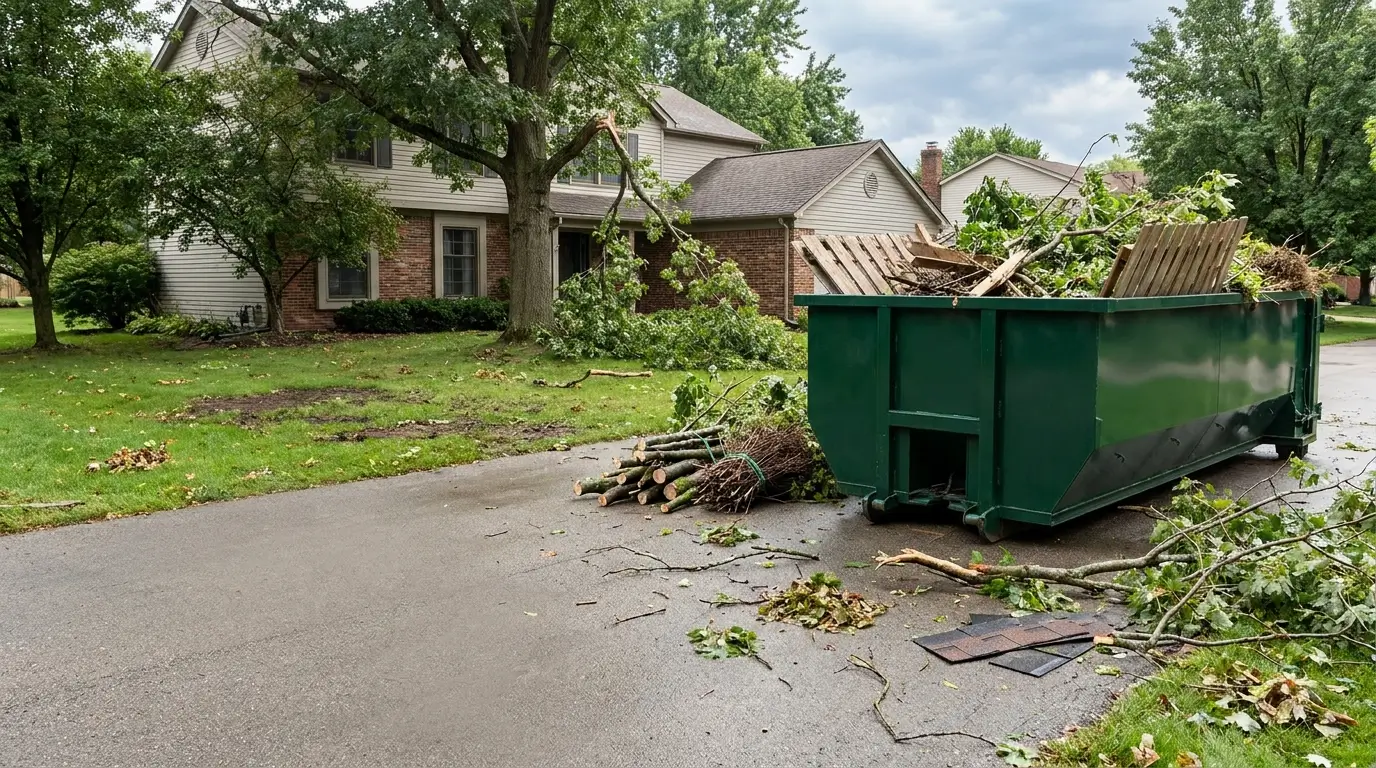
As winter fades and warmer weather arrives, many Warren homeowners begin looking at the projects they postponed during the colder months. Garages need organizing, basements need clearing, yards need attention, and outdoor areas may need repairs. Spring is also a popular time to prepare homes for sale, start renovations, replace old decks, and remove accumulated household clutter.
These projects can produce more waste than regular household garbage collection can handle. Old furniture, broken shelving, flooring, drywall, damaged fencing, construction debris, and other unwanted materials may need a separate disposal plan. A roll-off dumpster can provide a convenient central location for collecting approved project debris while cleanup work is underway.
However, renting a dumpster is not always the first step. Some spring cleanup materials may qualify for Warren’s municipal compost collection or other local disposal options. Other materials, particularly renovation debris and larger quantities of household junk, may require a private disposal arrangement.
Planning around the season helps you choose the right disposal method, avoid unnecessary rental days, and prepare your property before the first load is removed.
Warren Dumpster Rental helps connect customers with independent dumpster rental providers serving Warren, Michigan, and nearby communities where coverage is available. The matched provider handles rental arrangements, pricing, availability, delivery, pickup, and applicable disposal requirements.
This guide explains how to plan a spring cleanup in Warren, when a dumpster may be useful, what to consider before scheduling delivery, and how to manage different types of seasonal waste.
Why Spring Is a Popular Time for Dumpster Rentals in Warren
Spring brings a natural opportunity to reset your home and property after winter. Snow, freezing temperatures, and limited daylight can delay outdoor maintenance and renovation work. Once conditions improve, homeowners often begin several projects at the same time.
A single cleanup can involve multiple areas of a property, including the garage, basement, attic, yard, patio, and storage spaces. Each area may produce different types of waste.
Some common reasons Warren residents arrange spring dumpster rentals include:
- Cleaning out garages and storage sheds.
- Removing unwanted furniture and household clutter.
- Preparing homes for sale or rental.
- Renovating kitchens, bathrooms, and basements.
- Replacing damaged flooring and drywall.
- Removing old decks, fences, and patio materials.
- Cleaning up after landscaping projects.
- Clearing out rental properties between tenants.
- Managing debris from contractor work.
Spring can also be a busy period for contractors and property maintenance companies. If you need a dumpster for a specific project date, it is sensible to check availability before demolition or cleanup begins.
A little advance planning can help prevent debris from accumulating in driveways, garages, and work areas while you wait for a disposal solution.
Decide What Kind of Spring Cleanup You Are Planning
Before selecting a dumpster, identify the main work you want to complete. A small garage cleanout has different disposal needs from a full basement renovation or a major landscaping project.
Separating your work into categories makes it easier to estimate waste volume and determine which materials need special handling.
Garage and Storage Shed Cleanup
Garages often become storage areas for items that are no longer used. Over several years, they can accumulate broken shelving, damaged furniture, old boxes, worn-out equipment, packaging, and renovation leftovers.
A spring garage cleanup may involve:
- Removing damaged storage cabinets.
- Clearing broken furniture and household items.
- Disposing of old flooring or carpeting.
- Removing unwanted shelving and workbenches.
- Clearing approved packaging and general junk.
- Organizing tools and seasonal equipment.
A dumpster can be useful when the cleanup produces too much material for ordinary collection. It gives you one designated place to put approved debris while sorting through the space.
Before loading, separate reusable items, recyclable materials, electronics, batteries, chemicals, and other restricted waste. Do not assume every item can go into a mixed-debris container.
Basement and Attic Cleanouts
Basements and attics can hold furniture, boxes, damaged storage containers, old carpet, insulation, and miscellaneous household belongings.
These areas may also contain renovation debris from previous projects. If you are removing drywall, cabinets, flooring, or other building materials, confirm that the selected provider accepts those materials.
For a large cleanout, consider working one area at a time. This helps you estimate the amount of waste more accurately and reduces the chance of filling a container before the entire project is complete.
Yard and Landscaping Cleanup
Spring is also a good time to remove winter-damaged vegetation, trim shrubs, clear garden beds, and prepare outdoor spaces for warmer weather.
Yard projects can generate:
- Leaves and garden debris.
- Small branches and brush.
- Shrubs and plant trimmings.
- Soil and sod.
- Old landscape edging.
- Broken patio materials.
- Damaged outdoor furniture.
Not all these materials belong in the same disposal stream. Warren’s municipal compost program accepts certain yard materials under specific preparation rules, while private dumpster providers have their own acceptance policies.
Soil, sod, rocks, concrete, and other dense materials need particular attention because they can be heavy and may not be accepted in a standard dumpster.
Home Renovation and Repair
Spring is a popular time to begin indoor improvements that were postponed during winter. Kitchen updates, bathroom remodeling, flooring replacement, drywall repairs, and basement finishing can all generate substantial debris.
A dumpster may help collect approved materials such as:
- Old cabinets.
- Countertops, where accepted.
- Flooring and carpet.
- Drywall and trim.
- Packaging.
- Wood scraps.
- General renovation debris.
If your project includes concrete, tile, brick, shingles, or other heavy materials, ask the provider about separate disposal requirements. A container’s physical capacity does not mean it can safely carry any amount of heavy debris.
Warren’s Spring Compost Collection: What Residents Should Know
Before renting a dumpster for yard cleanup, check Warren’s municipal compost program. Some seasonal materials may be collected through the City’s regular curbside service when they meet the published requirements.
According to the City of Warren’s published 2026 calendar, curbside compost pickup runs from April 1 through December 1. The City’s Sanitation Division also states that compost is accepted at the Recycling Center throughout the year. Always check the current schedule in case the City announces a seasonal extension or other change.
The municipal program is useful for qualifying yard waste, but it does not replace a private dumpster rental for renovation debris, household junk, or materials outside the City’s collection rules.
Materials Accepted Through Curbside Compost
Warren’s published guidelines identify several types of yard waste for curbside compost collection, including:
- Grass clippings.
- Leaves.
- Garden and flower-bed debris.
- Small brush.
- Eligible shrub trimmings.
The City requires residents to use its 95-gallon compost cart with a brown lid or 30-gallon biodegradable brown paper bags. Plastic bags are not accepted for curbside compost.
Branches and shrubs must be bundled securely. The published rules specify bundles no longer than four feet, branches under two inches in diameter, and bundles light enough for one person to lift.
Compost should be placed at the curb by 6 a.m. on collection day or no earlier than 6 p.m. the evening before. The City also instructs residents to keep compost material five feet away from other garbage.
These requirements matter when planning a large spring yard cleanup. If your branches are too large or your material does not meet the City’s collection rules, you will need to check another appropriate disposal option.
Materials That Are Not Collected Through Regular Curbside Compost
Not every landscaping material qualifies as compost.
For example, Warren’s published guidance distinguishes ordinary yard waste from materials such as:
- Dirt.
- Sod.
- Rocks.
- Bricks.
- Concrete.
- Tree trunks and large logs.
- Tree stumps.
The City’s guidelines state that tree trunks and stumps are not collected curbside. The Sanitation Division’s current information also lists tree stumps among materials it does not accept at the Recycling Center. Contact the City before transporting trunk or stump material, because older guidance and current facility restrictions may differ.
Roots must also be handled separately under the City’s instructions: remove them from shrubs, remove the dirt, and place the roots with garbage while the cut and bundled shrub material goes with compost.
For a major landscaping project, do not assume the entire pile can be placed in a compost cart or paper bags.
City Compost Rules Are Different From Private Dumpster Rules
This is an important distinction.
A private dumpster provider may accept some yard materials that are not suitable for Warren’s curbside collection. Another provider may restrict branches, soil, sod, stumps, or mixed loads. The rules depend on the provider’s disposal arrangements and the type of container supplied.
Before scheduling a dumpster, explain exactly what your spring cleanup will produce. Ask whether the container can accept leaves, brush, shrubs, soil, sod, or mixed landscaping debris.
The City of Warren’s municipal compost program should not be treated as permission to load those materials into a private dumpster. Likewise, a private provider’s acceptance policy does not change the City’s curbside requirements.
You can review the City’s current information through its Sanitation Division.
When Is a Dumpster Better Than Regular Curbside Collection?
For a small amount of ordinary yard waste, Warren’s curbside compost program may be sufficient. A private dumpster becomes more useful when the cleanup involves a larger volume of mixed materials or waste that is not eligible for regular municipal collection.
Consider a dumpster when:
You are cleaning multiple areas at once. A garage, basement, attic, and spare room cleanout can generate more waste than ordinary weekly collection can reasonably handle.
You are renovating a property. Cabinets, drywall, flooring, trim, and other approved construction debris may require a separate container.
You are removing bulky items. Large quantities of furniture, shelving, and household junk can make a central collection point more practical.
You are working with a contractor. A dumpster can provide a designated location for approved job-site debris throughout the project.
You are preparing a rental property. A landlord or property manager may need to remove accumulated belongings and approved debris before repairs or new tenants move in.
You have a tight cleanup schedule. If several people are working on the property over a short period, a container may help keep waste organized and reduce repeated disposal trips.
A dumpster is not automatically the best choice for every material. Hazardous waste, certain electronics, batteries, tires, appliances, and other restricted items may need separate disposal. Confirm the provider’s rules before loading.
Choosing the Right Dumpster Size for Spring Cleanup
The right container size depends on the amount of waste, the type of material, and the project’s duration. A garage cleanout may need much less capacity than a full-house cleanout combined with a renovation.
The following are general project-planning examples. Actual container dimensions, capacities, weight allowances, and availability vary by provider.
| Dumpster size | Possible spring cleanup uses |
|---|---|
| 10-yard | Small garage cleanout, minor repair debris, limited household junk |
| 15-yard | Medium cleanout, flooring removal, smaller remodeling project |
| 20-yard | Larger garage or basement cleanup, kitchen renovation, mixed debris |
| 30-yard | Whole-property cleanout, major remodeling, larger construction project |
| 40-yard | Large commercial cleanup or substantial construction project |
10-Yard Dumpster for Smaller Cleanups
A 10-yard container may be suitable for a limited garage cleanup, a small room renovation, or a modest amount of approved household debris.
It can be a reasonable starting point when you are removing a few bulky items or completing a small repair project.
However, do not choose a small container simply because the project sounds simple. Furniture, cabinets, and bulky items can occupy considerable space.
15-Yard Dumpster for Medium Projects
A 15-yard container may provide more flexibility for a medium-sized spring cleanup. It can be useful when removing old flooring, clearing a larger garage, or combining several small household projects.
Estimate the debris before selecting this size. If the project includes heavy materials, verify the weight allowance rather than relying on volume alone.
20-Yard Dumpster for Larger Household Projects
A 20-yard dumpster may be suitable for a larger basement cleanout, kitchen renovation, or a combination of household cleanup tasks.
It can offer useful capacity for mixed approved debris, but the provider’s weight restrictions still apply. Heavy tile, masonry, soil, and roofing materials can change the size recommendation.
30- and 40-Yard Dumpsters for Major Projects
Larger containers may be appropriate for extensive renovations, commercial cleanouts, major property improvements, or substantial construction work.
Before choosing a large container, check whether the truck can access the property and whether there is enough room for placement. A large container may not be practical for every residential driveway.
For a more detailed comparison, read 10 vs 15 vs 20 Yard Dumpster: Which One Do You Need? or 20 Yard vs 30 Yard Dumpster for Remodels and Cleanouts.
Plan Your Spring Cleanup Timeline
A seasonal cleanup is easier to manage when the work is divided into stages. Rather than ordering a dumpster before you know what needs to go, create a simple plan.
Stage 1: Inspect the Property
Walk through the areas you intend to clean. Make a list of the main tasks and identify the materials likely to be removed.
Separate the project into categories such as household junk, renovation debris, yard waste, and bulky items.
This first inspection helps determine whether you need a dumpster at all and gives you a more accurate estimate of the container size.
Stage 2: Sort and Separate Materials
Before loading begins, separate reusable items, donations, recyclables, compostable yard waste, and general disposal materials.
Keep hazardous or restricted items out of the dumpster unless the provider explicitly confirms acceptance.
If you are removing appliances, electronics, paint, batteries, tires, or chemicals, ask about suitable disposal options. Do not mix these materials into a general debris load without approval.
Stage 3: Schedule the Main Work
Choose a delivery date that matches the project’s actual start.
If you are doing a garage cleanout, arrange enough time to remove items and load the container without rushing. If contractors are handling demolition, coordinate the delivery with their work schedule.
Avoid having a dumpster delivered several days before the project is ready unless you specifically need it early.
Stage 4: Complete the Cleanup and Loading
Load approved materials carefully and distribute weight evenly. Break down bulky items where practical, and avoid placing all the heavy material in one concentrated area.
Keep debris below the container’s fill line. Material sticking above the permitted level can create transportation and safety problems and may prevent pickup.
Stage 5: Arrange Pickup
Contact the provider when the container is ready for removal. If you expect the project to take longer than planned, ask about additional rental days before the agreed period expires.
Planning pickup in advance helps avoid unnecessary delays and possible extra-day charges.
Prepare Your Property Before the Dumpster Arrives
Spring cleanup projects often involve more outdoor activity, so placement and access should be considered before delivery.
Measure the Available Space
Measure the area where you expect the container to sit. Check the width and length of the proposed space and consider how much room the delivery truck needs to approach and position it.
Do not measure only the dumpster. The truck needs sufficient access to deliver and remove the container safely.
Check Overhead Obstructions
Look for tree branches, overhead wires, roof edges, garage doors, and other obstacles. A location that appears open from the ground may not provide enough clearance for delivery equipment.
Tell the provider about any access limitations before scheduling.
Protect the Driveway
Ask whether driveway protection is recommended for your selected container and placement area. Depending on the surface and delivery method, protective boards may help reduce direct contact between the container and pavement.
Move vehicles and remove items that could block the delivery route.
Check Local Placement Requirements
Do not assume that a dumpster can be placed anywhere outside the home.
Street placement, sidewalks, public rights-of-way, and locations near a building line may be subject to local restrictions. Warren customers should confirm the proposed placement with the appropriate City department before delivery if the location is uncertain.
A private driveway is often considered first, but its suitability depends on the exact property layout and applicable requirements.
For more detail, see Where Can You Put a Dumpster in Warren? Driveway vs Street.
Avoid Common Spring Dumpster Rental Mistakes
Spring is a busy time for home improvement and outdoor maintenance. A few common mistakes can make the cleanup more expensive or delay the project.
Renting Before Estimating the Waste
A container that is too small may fill before the work is finished. An unnecessarily large container may cost more than the project requires.
Take time to identify the main materials and estimate the total volume. If you are uncertain, describe the project to the provider and ask for a recommendation.
Mixing Restricted Materials With General Debris
Not everything from a spring cleanup belongs in a roll-off dumpster.
Paint, chemicals, batteries, tires, some appliances, electronics, and other materials may require separate disposal. Confirm the provider’s restrictions before loading.
Ignoring Weight Limits
Heavy debris can exceed the container’s weight allowance even when the dumpster is not full.
This is particularly important for concrete, brick, dirt, tile, shingles, and wet landscaping materials. Ask about material-specific restrictions and possible overweight charges.
For more information, read Dumpster Overage Fees: How Weight Limits Affect Your Final Bill.
Confusing City Compost Collection With Dumpster Acceptance
Warren’s curbside compost service has specific rules for accepted materials, bags, carts, and branch bundles. A private provider follows its own acceptance policy.
Check the appropriate rules for each disposal method rather than assuming they are interchangeable.
Scheduling Too Early or Too Late
A dumpster delivered before the project is ready may occupy driveway space unnecessarily. Waiting until after demolition begins may leave debris accumulating around the property.
Coordinate delivery with the first major cleanup or demolition day.
Forgetting About Pickup
The rental period and pickup process should be clear before the container arrives. Ask how to request removal and what happens if the project takes longer than expected.
What Affects the Cost of a Spring Dumpster Rental?
The cost of a dumpster rental depends on more than container size. A spring cleanup involving several types of waste may have different requirements from a simple household cleanout.
Common pricing factors include:
Container size: Larger containers may have different rental rates and disposal allowances.
Rental duration: The number of included days and any additional-day charges can affect the total.
Weight allowance: The included tonnage or weight limit matters, particularly for dense debris.
Material type: Some materials require separate handling or may not be accepted in standard mixed-debris containers.
Delivery location: The provider may consider distance, access, and service-area coverage.
Placement conditions: Difficult access or unusual placement requirements may affect scheduling or service arrangements.
Before confirming a rental, ask for the full price breakdown. Check what is included, what materials are accepted, how extra days are charged, and whether overweight fees apply.
For additional cost-planning guidance, read What Affects Dumpster Rental Cost in Warren, MI? and 7 Ways to Lower Your Dumpster Rental Bill.
Spring Cleanup Checklist for Warren Homeowners
Use this checklist to organize your project before arranging a dumpster.
- Walk through the garage, basement, attic, and outdoor areas.
- Identify the main cleanup and renovation tasks.
- Separate reusable, recyclable, compostable, and disposable materials.
- Check Warren’s current curbside compost schedule and preparation rules.
- Identify hazardous or restricted materials for separate disposal.
- Estimate the volume and weight of the debris.
- Confirm which container sizes are available.
- Ask the provider about weight limits and material acceptance.
- Measure the delivery and placement area.
- Check driveway access and overhead obstructions.
- Confirm the rental period and full price breakdown.
- Arrange delivery around the project’s start date.
- Keep the load below the fill line.
- Schedule pickup when the cleanup is complete.
Completing these steps before delivery can make the process more predictable and help reduce avoidable rental expenses.
Frequently Asked Questions
When does spring cleanup season start in Warren?
Residents often begin outdoor cleanup as winter conditions improve. Warren’s published 2026 calendar lists curbside compost collection from April 1 through December 1. The City’s Recycling Center accepts compost year-round. Check the current City schedule before relying on a particular collection date.
Do I need a dumpster for spring yard cleanup?
Not necessarily. Smaller amounts of eligible yard waste may be handled through Warren’s curbside compost program. A private dumpster may be more practical for larger projects, mixed debris, or materials that do not qualify for municipal collection. Check the private provider’s acceptance rules before scheduling.
Can I put leaves and branches in a rental dumpster?
That depends on the provider. Some providers may accept certain yard materials, while others may restrict them or require a separate container. Warren’s curbside compost rules are separate from private dumpster policies.
Does Warren collect branches during spring compost season?
The City’s published guidelines allow certain small branches and shrubs when they are securely bundled. Bundles must be four feet or less, branches must be under two inches in diameter, and each bundle must be light enough for one person to lift. Check the current rules before placing material at the curb.
Can I put soil, sod, or rocks in a dumpster?
Do not assume these materials are accepted in a standard roll-off container. Soil, sod, and rocks can be very heavy. Ask the provider whether a dedicated heavy-material container or another disposal arrangement is required.
Can I use a dumpster for a garage and basement cleanout at the same time?
Yes, if the provider accepts the materials and the container has sufficient capacity and weight allowance. Estimate the combined volume from both areas before choosing a size.
What size dumpster is best for a spring cleanout?
A smaller container may suit a limited garage or room cleanout, while a larger property cleanup may require a 20-yard or bigger container. The correct size depends on the volume, material type, and weight. Ask the provider for a recommendation based on your project details.
How long should I rent a dumpster for spring cleanup?
The required rental period depends on the size of the project and how many people are doing the work. A small cleanup may take only a few days, while a renovation or full-property cleanout may take longer. Confirm the included rental period and additional-day charges before booking.
Can I place a dumpster in my driveway in Warren?
A driveway may be a suitable location, but the exact property layout and local placement requirements matter. Measure the space, check truck access, and confirm any uncertain placement restrictions before delivery. Do not assume that street or public-right-of-way placement is automatically allowed.
What happens if my dumpster becomes too heavy?
The provider’s weight allowance and overage policy determine what happens. An overweight load may result in additional charges or require corrective action. Ask about weight limits before loading heavy materials such as concrete, brick, soil, tile, or shingles.
Should I schedule a dumpster before hiring a contractor?
Coordinate the container with the contractor’s start date and work plan. If demolition or major removal is scheduled, ask when the container should arrive and how long it is likely to be needed. Confirm availability with the provider rather than assuming a particular delivery date.
Who handles the dumpster delivery and pickup?
The independent provider matched to your request handles the rental arrangement, including confirmed pricing, billing, delivery, pickup, and applicable disposal requirements. Warren Dumpster Rental is a referral-style website that helps connect customers with independent providers; it does not itself operate dumpster delivery services.
Get Your Warren Spring Cleanup Organized
Spring is an excellent time to clear out accumulated household clutter, prepare outdoor spaces, and start home improvement projects. The key is choosing a disposal plan that matches the materials you need to remove.
For qualifying leaves, grass, garden debris, and small brush, Warren’s municipal compost program may be sufficient. For larger cleanouts, renovation debris, and other approved waste, a private roll-off dumpster may provide a more practical solution.
Before scheduling, estimate the debris, check material restrictions, review weight limits, prepare the placement area, and confirm the rental period. These steps can help prevent unexpected delays and charges.
Warren Dumpster Rental helps connect homeowners, renters, landlords, property managers, and contractors with independent dumpster rental providers serving Warren, Michigan, and nearby communities where coverage is available. Confirm your project address and rental requirements with the matched provider so you can plan your spring cleanup with greater confidence.