Estate Cleanout Checklist: Before You Rent a Dumpster
An estate cleanout can be one of the most demanding property cleanout projects a family faces. After a loved one passes away, moves into assisted living, or leaves a long-term residence, the property may contain decades of accumulated belongings. Furniture, clothing, appliances, personal documents, household goods, storage boxes, garage equipment, and renovation debris can quickly become overwhelming to sort and remove.
For families in Warren, Michigan, renting a roll-off dumpster can provide a practical way to manage the unwanted materials from an estate cleanout. Instead of making repeated trips to disposal facilities, you can collect eligible debris in one container and arrange pickup when the project is complete.
However, renting a dumpster should not be the first step. Estate cleanouts involve decisions that go beyond ordinary household junk removal. Some belongings may have financial or sentimental value, family members may need time to review personal possessions, and certain materials may require donation, recycling, or specialized disposal.
A little preparation can help prevent valuable items from being discarded, reduce unnecessary disposal costs, and make the entire process more organized.
This estate cleanout checklist explains what to do before renting a dumpster, how to sort belongings, how to estimate the amount of debris, which dumpster size may be appropriate, and what to confirm with a provider before scheduling delivery.
Whether you are preparing a home for sale, clearing a property after a family transition, or organizing a large household cleanout, these steps can help you approach the project with a clear plan.
What Is an Estate Cleanout?
An estate cleanout involves sorting, organizing, and removing belongings from a property that is being transferred, sold, prepared for occupancy, or otherwise cleared.
The property may belong to a family member who has passed away, someone moving into a smaller home, or an individual transitioning into a different living arrangement.
Unlike a basic room cleanout, an estate cleanout may involve several areas of a property, including:
- Bedrooms and closets
- Living rooms and dining rooms
- Kitchens and pantries
- Bathrooms
- Basements
- Attics
- Garages
- Storage sheds
- Workshops
- Outdoor storage areas
Some homes contain only a few years of belongings, while others have accumulated furniture, boxes, appliances, tools, and personal possessions over several decades.
The goal is not simply to remove everything. It is to identify what should be kept, distributed, donated, sold, recycled, or discarded.
A dumpster can help with the final disposal stage, but proper sorting should happen first.
Why Create an Estate Cleanout Checklist Before Renting a Dumpster?
Estate cleanouts can involve many decisions, and trying to make all of them while a dumpster is sitting in the driveway can create unnecessary pressure.
A checklist gives family members and anyone assisting with the project a consistent process to follow.
Protect Valuable and Sentimental Belongings
Some items may appear ordinary but have financial or personal significance.
Examples include:
- Family photographs
- Jewelry
- Important paperwork
- Property records
- Collectibles
- Antiques
- Personal letters
- Heirlooms
- Small valuables stored in drawers or boxes
Review these belongings before disposal begins.
Reduce Unnecessary Disposal Costs
Not every item needs to go into a dumpster. Furniture, clothing, working appliances, household goods, and other usable belongings may be suitable for donation, resale, or transfer to family members.
Removing reusable items before delivery can reduce the amount of material requiring disposal.
Choose a More Appropriate Dumpster Size
A property with a few large furniture pieces may need a different container than a house containing decades of accumulated belongings.
Sorting and estimating the debris first helps you select a more suitable size.
Prevent Delays and Scheduling Problems
Estate cleanouts often take longer than expected because of family discussions, document searches, donation arrangements, and property preparation.
Planning the project before booking helps you choose a realistic delivery date and rental period.
Estate Cleanout Checklist: Before You Rent a Dumpster
The following checklist covers the most important tasks to complete before scheduling a dumpster.
1. Confirm Who Has Authority to Manage the Property
Before removing belongings, make sure the person coordinating the cleanout has the appropriate permission.
This is especially important when the property is part of an estate or probate process.
Depending on the circumstances, the person responsible may be an executor, personal representative, trustee, property owner, or another authorized individual.
If multiple family members are involved, clarify who can approve decisions about belongings and disposal.
Discuss Important Decisions With Family Members
A cleanout can become complicated when different people have different expectations.
One family member may want to keep a piece of furniture, while another may believe it should be donated or discarded.
Before work begins, discuss:
- Which belongings family members want to keep
- Whether certain items need to be distributed
- Which items may be sold
- Whether an estate sale is planned
- Who will handle documents and valuables
- Who can approve disposal decisions
Avoid placing disputed or potentially valuable belongings in a dumpster until the appropriate people have reviewed them.
Check for Probate or Legal Restrictions
If the property is subject to probate, an estate administration process, or another legal arrangement, confirm any applicable requirements before disposing of belongings.
Do not assume that having access to the home automatically gives someone authority to discard its contents.
When legal ownership or disposal authority is uncertain, obtain appropriate professional guidance before proceeding.
2. Secure Important Documents and Personal Records
One of the most important estate cleanout tasks is finding and protecting documents.
Paperwork can easily become mixed with old mail, magazines, receipts, and other items that appear to be ordinary trash.
Set aside time to inspect drawers, filing cabinets, desks, storage boxes, and safes.
Documents to Look For
Important records may include:
- Property deeds and mortgage documents
- Wills and estate planning documents
- Insurance policies
- Bank and financial statements
- Tax records
- Vehicle titles
- Investment and retirement account records
- Business ownership documents
- Medical and personal records
- Birth, marriage, and other certificates
- Utility and service agreements
- Keys and access information
Keep these materials in a secure location.
Check Storage Areas Carefully
Important paperwork is not always stored in an obvious filing cabinet.
Look through:
- Desk drawers
- Bedroom dressers
- Office cabinets
- Lockboxes
- Closets
- Attic storage
- Basement shelving
- Boxes labeled with general descriptions
Do not discard sealed envelopes, notebooks, or document boxes without reviewing them.
For sensitive paperwork that is no longer needed, consider secure shredding rather than placing it in an ordinary dumpster.
3. Identify Jewelry, Cash, Collectibles, and Other Valuables
Before starting the disposal process, inspect areas where valuable items may be stored.
These can include jewelry boxes, dresser drawers, safes, desk compartments, storage cabinets, and containers that have not been opened for years.
Items Worth Reviewing
Pay attention to:
- Jewelry and watches
- Coins and currency
- Antiques
- Collectibles
- Artwork
- Vintage furniture
- Musical instruments
- Rare books
- Memorabilia
- Tools and specialty equipment
Some items may have more value than their appearance suggests.
If you are unsure whether something is valuable, set it aside for review instead of discarding it.
Keep an Inventory
For important items, maintain a simple written or digital inventory.
Record the item, its location, who is responsible for it, and whether it has been claimed, sold, donated, or retained.
Photographs can also help family members review belongings when they cannot be physically present.
4. Sort Belongings Into Clear Categories
Once important documents and valuables have been secured, begin sorting the remaining belongings.
A simple category system makes the process easier to manage.
Use separate areas, boxes, or labels for each group.
Category 1: Keep
These are belongings that family members want to retain.
Examples include:
- Family photographs
- Sentimental decorations
- Important furniture
- Personal collections
- Heirlooms
- Useful household equipment
- Clothing with personal significance
Keep these items away from the disposal area.
Category 2: Distribute to Family
Some belongings may be intended for different relatives.
Examples include furniture, kitchenware, decorations, books, artwork, and personal possessions.
Label each item with the intended recipient where appropriate.
Set a reasonable deadline for collection so that the cleanout does not remain unfinished indefinitely.
Category 3: Sell
Some items may be suitable for resale through an estate sale, auction, consignment shop, or private listing.
Potential items include:
- Antiques
- Collectibles
- Quality furniture
- Working appliances
- Tools
- Artwork
- Specialty equipment
Selling items may take additional time, so schedule this step before dumpster delivery if possible.
Category 4: Donate
Usable belongings may be suitable for donation.
Examples include:
- Clothing in acceptable condition
- Household goods
- Books
- Kitchenware
- Furniture
- Toys
- Blankets and linens
Donation organizations have their own acceptance requirements. Some may not accept mattresses, upholstered furniture, large appliances, or damaged goods.
Contact the organization before transporting items.
Category 5: Recycle or Dispose Separately
Certain items should be directed to appropriate recycling or disposal programs.
Examples may include:
- Batteries
- Electronics
- Tires
- Refrigerators
- Air conditioners
- Paint and chemicals
- Certain metal items
Confirm local requirements and whether a separate collection service is available.
Category 6: General Dumpster Debris
This category includes eligible unwanted materials that the selected dumpster provider accepts.
Examples may include:
- Broken household items
- Damaged furniture
- Old shelving
- Non-reusable storage containers
- General household junk
- Empty packaging
- Certain renovation debris
Always confirm material acceptance before loading.
5. Walk Through Every Room and Storage Area
Do not estimate an estate cleanout based only on the main living areas.
A home may look relatively organized while containing large amounts of material in less frequently used spaces.
Complete a room-by-room inspection.
Bedrooms and Closets
Look for:
- Old clothing
- Shoes
- Bedding
- Dressers
- Bed frames
- Mattresses
- Storage boxes
- Personal accessories
Check closet shelves and drawers before removing furniture.
Living Rooms and Dining Rooms
Identify:
- Sofas and chairs
- Tables
- Cabinets
- Entertainment furniture
- Rugs
- Lamps
- Decorations
- Bookshelves
Large furniture may take up substantial dumpster space, especially if it cannot be disassembled.
Kitchen and Pantry
Review:
- Small appliances
- Old cookware
- Dishes and glassware
- Cabinets
- Food storage containers
- Pantry contents
- Packaging
Dispose of food separately according to applicable collection requirements. Do not assume every food product or liquid is suitable for a roll-off dumpster.
Basement
Basements often contain years of accumulated storage.
Check for:
- Old furniture
- Cardboard boxes
- Holiday decorations
- Broken appliances
- Exercise equipment
- Storage shelving
- Renovation leftovers
- Tools and equipment
Pay particular attention to liquids, chemicals, and older building materials.
Attic
Attics can contain:
- Old clothing
- Boxes of photographs
- Furniture
- Decorations
- Books
- Damaged insulation
- Unused household items
Use appropriate safety precautions when accessing attic spaces. Avoid disturbing insulation or other materials that may require professional assessment.
Garage and Workshop
Garages often contain a combination of ordinary household junk and materials that require special handling.
Look for:
- Tools
- Workbenches
- Shelving
- Tires
- Automotive fluids
- Paint
- Batteries
- Propane cylinders
- Scrap metal
- Construction materials
Separate questionable materials before selecting a dumpster.
6. Estimate How Much Debris Needs to Be Removed
After sorting, estimate the amount of material that will actually require disposal.
This is the stage when you should begin thinking about dumpster capacity.
Do not include items that will be kept, donated, sold, or handled through separate recycling programs in your dumpster estimate.
Measure Large Debris Piles
If possible, group loose debris into manageable piles.
Measure the approximate length, width, and height in feet.
Multiply the measurements to calculate cubic feet, then divide by 27 to convert the result into cubic yards.
For example:
A pile measuring 10 feet long, 6 feet wide, and 3 feet high has a volume of:
10 × 6 × 3 = 180 cubic feet.
180 ÷ 27 = approximately 6.7 cubic yards.
This provides a rough estimate, not a guaranteed container requirement. Furniture and irregular objects can create empty spaces that reduce practical capacity.
Account for Bulky Furniture
Large items can occupy more space than their weight suggests.
A sofa, mattress, wardrobe, or dining table may fill a substantial part of a container even when it is not particularly heavy.
If safe and practical, disassemble suitable furniture to use the available space more efficiently.
Allow Room for Unexpected Debris
Estate cleanouts often uncover additional belongings after shelves, closets, and storage areas are emptied.
Avoid estimating only the items you can see at the beginning.
A reasonable capacity buffer can help reduce the risk of running out of space, but the appropriate container should still be based on the actual project.
7. Choose the Right Dumpster Size for the Estate Cleanout
The correct dumpster size depends on the property’s contents, number of rooms, bulky furniture, and the amount of additional debris.
A small apartment cleanout may require a different container from a full house with a basement, attic, and garage.
Here are general guidelines.
10-Yard Dumpster for Small Estate Cleanouts
A 10-yard dumpster may work for a limited cleanout involving a relatively small amount of unwanted material.
Potential uses include:
- Clearing one or two rooms
- Removing a few pieces of furniture
- Disposing of general household junk
- Cleaning a small storage area
- Removing limited boxes and damaged belongings
This size may not be sufficient for a full house containing multiple rooms of furniture and accumulated possessions.
15-Yard Dumpster for Moderate Cleanouts
A 15-yard container may be appropriate for a moderate cleanout where several rooms contain unwanted items but the property does not require extensive debris removal.
Possible projects include:
- Clearing several bedrooms
- Removing furniture and household junk
- Cleaning out a smaller home
- Combining a room cleanout with a basement or storage area
Availability varies by provider, so confirm whether this size is offered.
20-Yard Dumpster for Larger Estate Cleanouts
A 20-yard dumpster may be worth considering for a larger residential cleanout.
It can be suitable for projects involving:
- Multiple rooms
- Large furniture pieces
- Household goods and boxes
- Basement or garage contents
- A substantial amount of general junk
However, a large amount of dense material can reach the weight allowance before the container is full.
30-Yard Dumpster for Whole-Home Cleanouts
A 30-yard dumpster may be useful when clearing a larger home or combining multiple areas of the property.
Potential projects include:
- Whole-house estate cleanouts
- Large basement and attic cleanouts
- Multiple rooms of furniture and household items
- Property preparation before sale
- Estate cleanouts combined with renovation work
40-Yard Dumpster for Very Large Projects
A 40-yard container may be appropriate for exceptionally large projects, such as extensive property cleanouts or major renovation debris removal.
It is not automatically the best choice for every whole-home estate cleanout. A provider should review the debris volume, weight, material types, and placement conditions before recommending it.
Estate Cleanout Dumpster Size Comparison
| Dumpster size | General project suitability |
|---|---|
| 10-yard | Small cleanout or limited household debris |
| 15-yard | Moderate cleanout involving several rooms |
| 20-yard | Larger residential cleanout |
| 30-yard | Whole-home cleanout or multiple storage areas |
| 40-yard | Very large cleanout or major renovation project |
These are general planning recommendations. Actual capacity, dimensions, weight limits, and availability depend on the provider.
For a more detailed comparison, see our Dumpster Sizes page and 10 vs 15 vs 20 Yard Dumpster: Which One Do You Need?
8. Identify Heavy Materials and Understand Weight Limits
An estate cleanout may include materials that are much heavier than ordinary household junk.
Examples include:
- Concrete blocks
- Bricks
- Stone
- Tile
- Dirt
- Roofing materials
- Heavy metal equipment
- Large quantities of construction debris
These materials can affect the total weight of the dumpster.
Volume Is Not the Same as Weight
A container can appear only partially full while already approaching its permitted weight limit.
This is especially important when a property cleanout includes renovation leftovers or dense construction materials.
Do not assume that choosing a larger dumpster automatically increases the amount of weight the truck can transport.
Ask About Included Weight
Before booking, ask:
- What weight allowance is included?
- How are overweight loads charged?
- Are heavy materials accepted?
- Do concrete, brick, or dirt require a separate container?
- Are there restrictions on mixing construction debris with household junk?
Make sure the provider understands the actual materials involved.
For additional information, read Dumpster Overage Fees: How Weight Limits Affect Your Final Bill.
9. Separate Hazardous and Restricted Materials
One of the most important steps in an estate cleanout is identifying materials that should not go into a standard dumpster.
Older homes and garages can contain products that have been stored for many years.
Paint and Chemical Products
Look for:
- Paint
- Paint thinner
- Stains
- Solvents
- Pesticides
- Cleaning chemicals
- Automotive fluids
- Pool chemicals
Do not pour liquids into the dumpster or place containers inside without confirming acceptance.
Some types of household paint may qualify for specific local disposal procedures, but rules depend on the product and local program.
Batteries and Electronics
Old batteries, rechargeable devices, computers, televisions, and other electronics may require separate recycling or disposal.
Check local collection options rather than mixing them with general waste.
Tires
Tires are often subject to separate disposal requirements. Ask whether the dumpster provider accepts them and whether special arrangements are necessary.
Refrigerators and Air Conditioners
Refrigerators, freezers, air conditioners, and dehumidifiers may contain refrigerants that require proper recovery.
Confirm whether the provider accepts these appliances and what preparation is required.
Propane Cylinders
Propane tanks and other pressurized containers should not be placed in a standard dumpster unless an appropriate disposal provider specifically confirms an approved process.
Asbestos and Other Potentially Hazardous Building Materials
Older properties may contain materials that require specialized handling.
If you suspect asbestos or another hazardous substance, do not disturb it casually. Obtain appropriate professional guidance before removal.
For a broader list of accepted and prohibited items, see What Can You Put in a Roll-Off Dumpster?
10. Arrange Donations, Resale, and Recycling Before Delivery
Once the sorting process is complete, arrange the removal of items that do not belong in the dumpster.
This can reduce disposal volume and make the property cleanout more efficient.
Schedule Donations
Contact donation organizations to confirm:
- Which items they accept
- Whether items must be in working condition
- Whether furniture pickup is available
- Whether mattresses are accepted
- Whether there are size or quantity restrictions
Do not assume that every organization accepts all household goods.
Plan an Estate Sale or Private Sale
If the property contains valuable furniture, antiques, collectibles, or other desirable items, consider whether selling them makes sense.
Allow enough time for pricing, advertising, buyer communication, and pickup.
Avoid scheduling dumpster delivery before important sales or family distributions are complete.
Recycle Suitable Materials
Some items may be accepted through recycling programs.
Potential examples include:
- Scrap metal
- Cardboard
- Certain electronics
- Batteries
- Appliances
- Tires
Confirm the requirements of the recycling facility or collection program before transporting materials.
11. Prepare the Property for Dumpster Delivery
After sorting and estimating the debris, prepare a suitable location for the container.
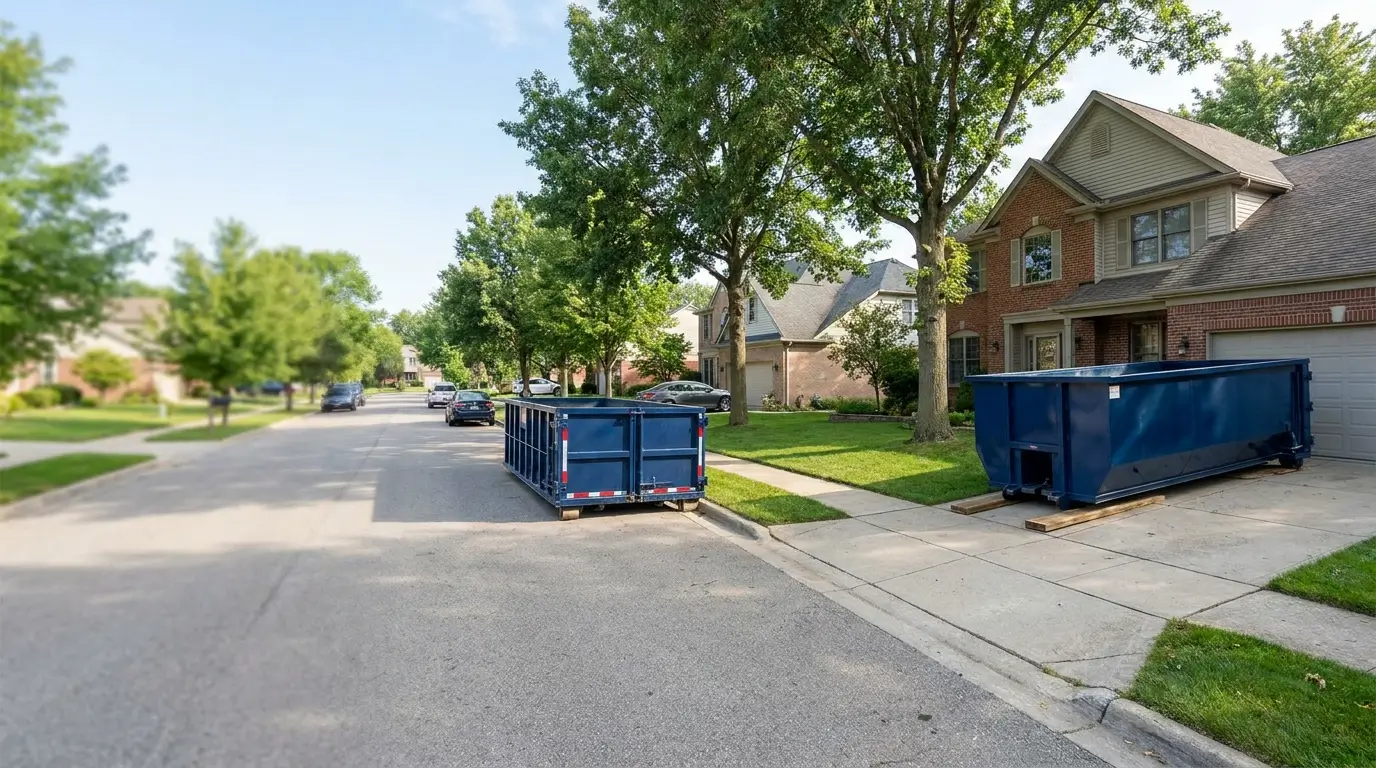
For many residential estate cleanouts, a driveway is the most practical option.
Clear the Driveway
Remove vehicles, trailers, equipment, and other obstacles before delivery.
Make sure the truck has enough room to approach and position the dumpster.
Check Overhead Clearance
Look for:
- Tree branches
- Power lines
- Roof overhangs
- Garage structures
- Other overhead obstructions
The delivery vehicle may require additional clearance while placing the container. Exact requirements depend on the equipment used.
Review Driveway Protection
A loaded roll-off dumpster can be heavy, and the delivery process may affect certain surfaces.
If the property has decorative concrete, pavers, asphalt, or a recently repaired driveway, discuss protective measures with the provider before delivery.
Boards or other protective materials may be useful in some situations, but no protection method guarantees that a surface will remain undamaged.
See our Driveway-Safe Rentals page for more information about placement considerations.
Confirm Public Placement Requirements
If the dumpster cannot fit on private property and you are considering a street or public right-of-way location, verify the applicable requirements with the City of Warren and the provider before scheduling.
Do not assume that a standard dumpster rental automatically authorizes placement on public property.
12. Choose a Realistic Rental Period
Estate cleanouts often involve more than loading a dumpster.
Family discussions, document searches, donations, sales, and sorting can all affect the project schedule.
Before arranging delivery, estimate how much time you need.
Small Estate Cleanout
A limited cleanout involving a few rooms may be completed over a weekend if the belongings have already been sorted.
Moderate Estate Cleanout
A home with several rooms, furniture, and storage areas may require several days.
Whole-Home Estate Cleanout
A property with a full basement, attic, garage, and multiple bedrooms may require a longer schedule.
Do not assume that the rental period will automatically extend if the project is delayed.
Ask the provider how extra days are charged and whether early pickup is available.
For more information, read How Long Can You Keep a Rental Dumpster?
13. Understand the Rental Quote Before Booking
Dumpster rental costs vary by container size, location, rental period, included weight, and disposal requirements.
Before confirming a rental in Warren, MI, ask the provider to explain what the quote includes.
Questions to Ask
- Which dumpster size is being provided?
- What are its approximate dimensions?
- How many rental days are included?
- What weight allowance is included?
- What is the charge for exceeding the weight allowance?
- Are delivery and pickup included?
- Are extra rental days charged separately?
- Which materials are prohibited?
- Are appliances accepted?
- Are there additional charges for special materials?
- What are the rules for overfilled containers?
- Can pickup be requested early?
Ask for the terms in writing so you can review the full arrangement.
Avoid Comparing Quotes by Price Alone
A low advertised price may not include the same weight allowance, rental period, or services as another quote.
Compare the complete terms rather than looking only at the initial amount.
For a more detailed explanation, see What Affects Dumpster Rental Cost in Warren, MI?
14. Follow a Practical Estate Cleanout Timeline
A clear schedule can make a large project easier to manage.
The following example can be adjusted depending on property size and family availability.
Phase 1: Planning
- Confirm who is authorized to manage the cleanout.
- Discuss family priorities.
- Review any applicable legal requirements.
- Identify important documents and valuables.
Phase 2: Sorting
- Work through each room.
- Separate belongings into keep, distribute, sell, donate, recycle, and dispose categories.
- Photograph or inventory important items.
- Set aside restricted materials.
Phase 3: Disposal Preparation
- Estimate debris volume.
- Select a suitable dumpster size.
- Confirm weight limits and accepted materials.
- Arrange donations and recycling.
- Request a complete rental quote.
Phase 4: Delivery and Loading
- Prepare the driveway.
- Confirm delivery access.
- Load accepted materials safely.
- Distribute weight evenly.
- Keep debris below the fill line.
Phase 5: Final Pickup
- Review the loaded container.
- Confirm that restricted items are not included.
- Contact the provider for pickup.
- Review any remaining rental days or additional charges.
For a large property, these phases may take more than a week. Allow enough time for family coordination and unexpected discoveries.
15. Common Estate Cleanout Mistakes to Avoid
Even a well-intentioned cleanout can become more expensive or difficult when important steps are overlooked.
Discarding Belongings Before Family Review
Avoid putting personal possessions into the dumpster before the appropriate family members have had an opportunity to review them.
Ignoring Documents and Valuables
Check drawers, safes, filing cabinets, boxes, and storage areas before disposal.
Renting a Dumpster Too Early
Booking delivery before sorting and estimating debris can result in an unsuitable container or unnecessary rental days.
Choosing a Container Based Only on Price
A smaller container may seem less expensive, but it can become costly if the project requires an additional haul.
Mixing Restricted Materials With Household Junk
Paint, chemicals, batteries, tires, refrigerant appliances, and other restricted items may require separate disposal.
Underestimating the Project Timeline
Family decisions, estate sales, donations, and document searches can add time. Plan accordingly.
Overloading the Container
Never load materials above the marked fill line or rim. Overfilled dumpsters may not be accepted for transportation until the load is corrected.
Forgetting Placement Requirements
Check truck access, overhead clearance, driveway conditions, and any applicable public placement requirements before delivery.
Printable Estate Cleanout Checklist
Use this condensed checklist to organize the project before renting a dumpster.
Legal and family preparation
- Confirm who is authorized to manage the property.
- Discuss disposal decisions with relevant family members.
- Review any applicable probate or estate requirements.
- Agree on how important belongings will be distributed.
Documents and valuables
- Locate property and financial documents.
- Secure wills, insurance records, and other important paperwork.
- Check safes, drawers, and storage boxes.
- Separate jewelry, cash, collectibles, and valuables.
- Create an inventory of important items.
Sorting
- Separate items to keep.
- Identify items for family distribution.
- Set aside items for resale.
- Arrange donations.
- Identify recyclable materials.
- Separate general dumpster debris.
Dumpster planning
- Inspect every room and storage area.
- Estimate the total debris volume.
- Identify bulky furniture.
- Check for heavy materials.
- Identify hazardous and restricted items.
- Compare suitable dumpster sizes.
- Confirm provider availability.
Before delivery
- Review the complete rental quote.
- Confirm included rental days.
- Confirm the weight allowance.
- Verify accepted materials.
- Clear the placement area.
- Check overhead clearance.
- Discuss driveway protection.
- Confirm delivery instructions.
Before pickup
- Keep the load below the fill line.
- Confirm restricted materials are excluded.
- Distribute weight appropriately.
- Contact the provider to arrange pickup.
- Review any applicable additional charges.
Frequently Asked Questions
What should I do first when cleaning out an estate?
Start by confirming who has authority to manage the property. Then secure important documents, valuables, and personal belongings before sorting the remaining contents into categories such as keep, distribute, sell, donate, recycle, and dispose.
When should I rent a dumpster for an estate cleanout?
Rent a dumpster after you have reviewed the property, separated important belongings, identified restricted materials, and estimated the amount of debris. This helps you choose a more appropriate container and rental period.
What size dumpster is best for an estate cleanout?
A 10-yard dumpster may suit a small cleanout, while a 15-yard or 20-yard container may work for a moderate project. A 30-yard or 40-yard container may be more appropriate for a large property or extensive cleanout. The best size depends on the volume, weight, and material types.
Can I use one dumpster for an entire house cleanout?
Possibly, depending on the property’s contents and the container’s capacity and weight limit. A large home with a basement, attic, and garage may produce more debris than one container can accommodate. Ask the provider to assess the project before booking.
Can I put furniture in an estate cleanout dumpster?
Many providers accept ordinary household furniture, including tables, chairs, cabinets, and sofas. However, acceptance can vary by provider and item. Donate or sell usable furniture before disposal when practical.
Should I donate belongings before renting a dumpster?
Yes, when possible. Sorting donations first can reduce the amount of debris requiring disposal. Contact donation organizations in advance to confirm what they accept and whether pickup is available.
Can I put old appliances in a roll-off dumpster?
Some providers accept certain appliances, but refrigerators, freezers, air conditioners, and dehumidifiers may require refrigerant recovery or special handling. Confirm acceptance and preparation requirements before loading.
What should I do with paint and chemicals found during an estate cleanout?
Keep them separate from general household debris. Paint, solvents, automotive fluids, pesticides, and other chemicals may require specialized disposal or an approved local collection program.
How long does a whole-house estate cleanout take?
The time required depends on the size of the property, the number of belongings, and how much sorting is necessary. A smaller cleanout may take a few days, while a large property with an attic, basement, and garage can take considerably longer.
Do I need to be present when the dumpster is delivered?
Not necessarily. Some providers allow unattended delivery if the placement location is clear and accessible. Confirm the provider’s policy and give any necessary placement instructions before delivery.
Can a dumpster be placed on the street in Warren, MI?
Do not assume street placement is automatically allowed. Verify the exact location and applicable requirements with the City of Warren and the dumpster provider before scheduling delivery.
What happens if the dumpster becomes overweight?
The provider may apply additional weight charges or require the load to be adjusted before transportation. The rental agreement determines how overages are handled, so review the included allowance before loading.
Final Thoughts
An estate cleanout is easier to manage when important decisions are made before disposal begins.
Confirm who is authorized to manage the property, secure documents and valuables, coordinate with family members, and sort belongings before choosing a dumpster. Estimate the debris volume, identify restricted materials, and review weight limits so the selected container matches the actual project.
For homeowners and families in Warren, Michigan, a roll-off dumpster can provide a convenient way to collect eligible unwanted materials during a property cleanout. The key is to coordinate delivery with the sorting and removal schedule rather than rushing into the rental process.
Warren Dumpster Rental helps connect customers with independent dumpster rental providers serving Warren, Michigan and nearby communities where coverage is available. The matched provider handles availability, rental arrangements, pricing, billing, delivery, and pickup.
By following a clear estate cleanout checklist before renting, you can protect important belongings, reduce avoidable disposal problems, and make the property preparation process more organized.