Kitchen Remodel Debris: What Size Dumpster Do You Need?
A kitchen remodel can transform the appearance and functionality of your home, but the demolition and construction process can generate a surprising amount of debris. Old cabinets, countertops, flooring, drywall, sinks, plumbing fixtures, packaging, and damaged building materials all need to be removed before the new kitchen can take shape.
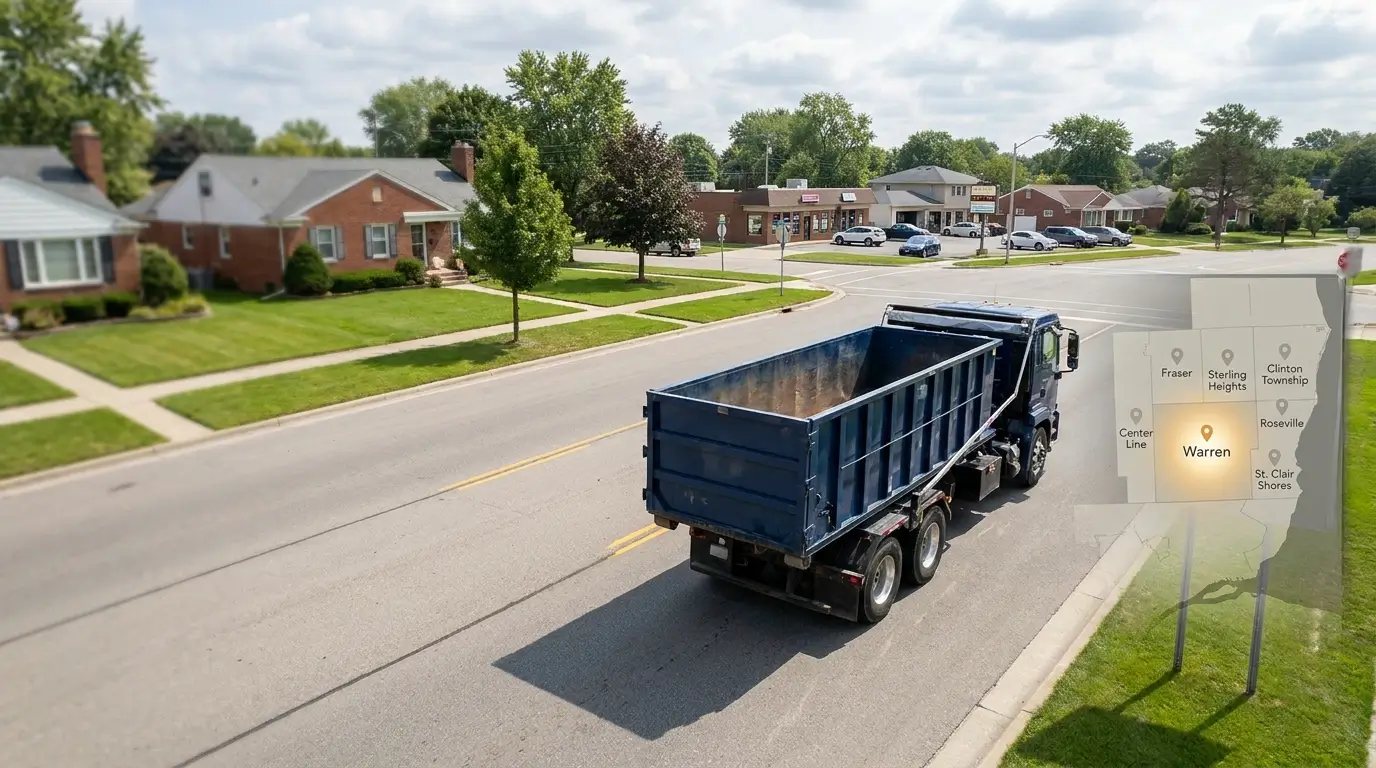
For homeowners in Warren, Michigan, choosing the right dumpster is an important part of planning a kitchen renovation. A container that is too small may fill up before demolition is complete, while a much larger dumpster than necessary can increase the rental cost.
The challenge is that kitchen remodeling debris varies considerably from one project to another. Replacing cabinet doors and countertops produces a different waste volume than completely gutting a kitchen down to its framing. The type of materials also matters because dense items such as tile, stone, and concrete can reach a dumpster’s weight allowance before the container is full.
So, what size dumpster do you need for a kitchen remodel?
For a smaller renovation, a 10-yard dumpster may be sufficient. A moderate kitchen demolition may require a 15-yard or 20-yard container, while a larger kitchen gut or a project involving additional rooms may justify a 20-yard or 30-yard dumpster.
This guide explains how to estimate kitchen remodel debris, compare dumpster sizes, understand weight limits, and prepare for dumpster delivery. Whether you are replacing cabinets, removing old flooring, or completing a full kitchen renovation, these tips can help you choose a suitable container and plan debris removal more efficiently.
Why Kitchen Remodeling Creates So Much Debris
A kitchen may be one of the smaller rooms in a house, but remodeling it can generate a significant amount of waste.
Unlike a simple room cleanout, a kitchen renovation often involves removing several permanent fixtures and layers of building materials.
Depending on the project, debris may include:
- Old kitchen cabinets
- Cabinet doors and drawers
- Countertops
- Backsplash tile
- Ceramic or porcelain flooring
- Vinyl flooring
- Laminate flooring
- Drywall and plaster
- Wood framing and trim
- Sinks and plumbing fixtures
- Damaged shelving
- Old insulation
- Packaging from new cabinets and appliances
The total amount depends on the size of the kitchen, the scope of demolition, and whether the renovation includes structural changes.
Partial Kitchen Remodel
A partial remodel may involve replacing countertops, cabinet doors, backsplash, or flooring without removing the entire kitchen.
This type of project usually produces less debris than a complete demolition.
A smaller dumpster may be sufficient if the materials are relatively lightweight and the project does not include additional rooms.
Full Kitchen Remodel
A full remodel may involve removing cabinets, countertops, flooring, drywall, and other fixtures.
The debris volume can increase quickly, especially when the kitchen has large cabinets, multiple countertop sections, and tile flooring.
A 15-yard or 20-yard dumpster may be worth considering, depending on the kitchen’s size and the materials being removed.
Complete Kitchen Gut
A complete kitchen gut involves removing most or all existing finishes and fixtures.
The project may include:
- Upper and lower cabinets
- Countertops
- Flooring
- Backsplash
- Drywall
- Trim
- Shelving
- Old fixtures
- Other construction debris
A 20-yard dumpster may be a practical starting point for many larger kitchen demolition projects. A 30-yard container may be appropriate when the renovation includes additional rooms or substantial construction debris.
The right choice should be based on an actual debris estimate rather than the project label alone.
Step 1: Identify Everything Being Removed
Before choosing a dumpster, make a list of the materials that will be removed from the kitchen.
This helps you estimate the amount of debris and identify materials that may have special disposal requirements.
Kitchen Cabinets
Cabinets can take up substantial space because of their size and shape.
A typical kitchen may contain:
- Upper wall cabinets
- Lower base cabinets
- Pantry cabinets
- Drawer units
- Corner cabinets
- Cabinet doors
- Shelving and hardware
If cabinets are being removed, determine whether they can be reused, donated, or sold.
If they are damaged or unsuitable for reuse, ask the dumpster provider whether they accept the cabinet materials.
Disassembling cabinets can make loading easier, but avoid creating unnecessary loose debris if the cabinets can be loaded efficiently in larger sections.
Countertops
Countertops can be among the heaviest materials in a kitchen remodel.
Common countertop materials include:
- Laminate
- Solid surface
- Granite
- Quartz
- Marble
- Natural stone
A laminate countertop is generally much lighter than a thick stone countertop.
If the project involves granite, quartz, or another dense material, contact the provider before booking. Some providers may have restrictions on heavy materials or require a separate disposal arrangement.
Do not assume that a dumpster with plenty of empty space can safely accommodate unlimited countertop debris.
Kitchen Flooring
Floor removal can generate a large amount of debris, particularly when several layers are involved.
Common materials include:
- Ceramic tile
- Porcelain tile
- Vinyl flooring
- Laminate flooring
- Hardwood
- Engineered wood
- Carpet and padding
Tile and stone flooring can be especially heavy. Vinyl, carpet, and some laminate products are generally lighter, although their total weight depends on the amount being removed.
If the old floor includes multiple layers of material, estimate the combined debris rather than considering only the visible surface.
Drywall and Plaster
Kitchen demolition may involve removing drywall around cabinets, backsplashes, plumbing lines, or electrical work.
The amount depends on whether the project requires small repairs or extensive wall removal.
Separate drywall from other materials when the provider or disposal facility has specific sorting requirements.
Sinks, Fixtures, and Plumbing Materials
Old kitchen sinks, faucets, plumbing fixtures, and related materials may also become part of the debris pile.
Metal fixtures may be suitable for recycling through an appropriate program.
Ask the provider whether these items are accepted in a mixed construction debris container.
Appliances
A kitchen remodel may involve replacing:
- Refrigerators
- Freezers
- Dishwashers
- Ovens
- Ranges
- Microwaves
- Range hoods
Do not assume all appliances can go into a standard dumpster.
Refrigerators and freezers may contain refrigerants that require proper recovery. Other appliances may have separate recycling or disposal requirements.
Confirm acceptance and preparation instructions before loading them.
Step 2: Choose the Right Dumpster Size
Once you understand the materials being removed, you can begin comparing dumpster sizes.
The following recommendations are general planning guidelines. Actual capacity, dimensions, weight allowances, and availability vary by provider.
10-Yard Dumpster for Small Kitchen Renovations
<AsyncImage query=”compact 10 yard roll off dumpster outside residential home driveway” aspectRatio=”16:9″ width=”100%”/>
A 10-yard dumpster may be suitable for a smaller kitchen project that produces a limited amount of debris.
Potential uses include:
- Replacing cabinet doors and a few cabinets
- Removing a small backsplash
- Disposing of limited countertop material
- Removing a small section of flooring
- Clearing old fixtures and general renovation debris
A 10-yard container may also work when some materials are being donated, recycled, or removed through separate disposal arrangements.
However, bulky cabinets and dense countertops can use up available space or weight capacity quickly.
Consider a 10-yard dumpster when: The renovation is limited in scope and the amount of demolition debris is relatively small.
15-Yard Dumpster for Moderate Kitchen Remodels
<AsyncImage query=”15 yard roll off dumpster residential driveway construction renovation debris” aspectRatio=”16:9″ width=”100%”/>
A 15-yard dumpster can provide additional room for a moderate kitchen renovation.
It may be suitable for projects involving:
- Removing several kitchen cabinets
- Replacing countertops
- Removing backsplash tile
- Taking out flooring
- Disposing of drywall and trim
- Clearing general remodeling debris
This size may be useful when a 10-yard container seems too small but a 20-yard dumpster would provide more capacity than the project requires.
Availability varies by provider, so confirm whether a 15-yard container is offered in your area.
Consider a 15-yard dumpster when: You are removing multiple kitchen fixtures and finishes but are not completing a large-scale demolition.
20-Yard Dumpster for Full Kitchen Remodels
<AsyncImage query=”20 yard roll off dumpster in residential driveway with home renovation construction debris” aspectRatio=”16:9″ width=”100%”/>
A 20-yard dumpster is often worth considering for a more extensive kitchen renovation.
It may be appropriate for:
- Removing most kitchen cabinets
- Replacing countertops and flooring
- Taking down backsplash and drywall
- Completing a full kitchen demolition
- Combining kitchen debris with limited nearby renovation waste
A 20-yard container provides more volume for bulky materials, but weight limits remain important.
Large amounts of stone countertops, ceramic tile, or other dense materials can exceed the included weight allowance even when the container is not full.
Consider a 20-yard dumpster when: The project involves a substantial kitchen demolition or several types of construction debris.
30-Yard Dumpster for Large Renovations
<AsyncImage query=”large 30 yard roll off dumpster residential renovation project driveway” aspectRatio=”16:9″ width=”100%”/>
A 30-yard dumpster may be suitable when the kitchen remodel is part of a larger renovation.
Examples include:
- Remodeling a kitchen and dining area
- Removing cabinets and flooring from multiple rooms
- Completing a large open-plan renovation
- Combining kitchen demolition with basement or living-room work
- Removing substantial quantities of drywall, wood, and other debris
For a standard kitchen-only project, a 30-yard dumpster may be more capacity than necessary.
Compare the estimated debris volume, weight allowance, and rental cost before selecting this size.
Consider a 30-yard dumpster when: The renovation extends beyond the kitchen or involves a large amount of demolition debris.
40-Yard Dumpster for Major Whole-Home Projects
A 40-yard container is generally more appropriate for exceptionally large renovation or construction projects than an ordinary kitchen remodel.
It may be useful when the kitchen work is part of a whole-home renovation involving multiple rooms, substantial demolition, or large quantities of accepted construction debris.
For a kitchen-only project, this size may be unnecessary.
Kitchen Remodel Dumpster Size Comparison
| Dumpster size | Possible kitchen project |
|---|---|
| 10-yard | Small kitchen update or limited demolition |
| 15-yard | Moderate remodel with cabinets, flooring, and fixtures |
| 20-yard | Full kitchen demolition or extensive renovation |
| 30-yard | Kitchen plus dining area or multiple rooms |
| 40-yard | Large whole-home renovation |
These are estimates for planning, not guaranteed recommendations. The provider should consider the material types, dimensions, and weight of your debris before confirming a container.
Step 3: Estimate the Amount of Kitchen Debris
Choosing a dumpster based on the kitchen’s square footage alone can be misleading.
Two kitchens of similar size can generate very different amounts of waste depending on what is being removed.
A kitchen with new cabinet doors and countertops may produce relatively little debris. A complete demolition involving cabinets, flooring, drywall, and fixtures may require considerably more capacity.
Make a Material Inventory
List the main items being removed.
For example:
| Material | What to estimate |
|---|---|
| Cabinets | Number and approximate size of units |
| Countertops | Total sections and material type |
| Flooring | Approximate square footage |
| Backsplash | Approximate wall area |
| Drywall | Number of sections or sheets |
| Fixtures | Sinks, trim, and other items |
| Appliances | Type and quantity |
This inventory can help a provider understand the project before recommending a container.
Calculate Loose Debris Volume
If the debris has been collected into a pile, estimate its length, width, and height in feet.
Multiply these measurements to calculate cubic feet, then divide by 27 to convert the result into cubic yards.
Example:
Suppose your kitchen demolition debris is grouped into a pile measuring:
- Length: 8 feet
- Width: 6 feet
- Height: 3 feet
The estimated volume is:
8 × 6 × 3 = 144 cubic feet.
144 ÷ 27 = approximately 5.3 cubic yards.
This is only a rough estimate. Irregular materials, bulky cabinets, and empty spaces between objects can affect the amount of usable container space required.
Account for Materials That Have Not Been Removed Yet
If you are estimating before demolition, remember that the materials may occupy a different amount of space once they are dismantled.
Cabinet doors, drawers, countertops, and flooring sections may fit together differently after removal.
Ask your contractor or provider to review the expected debris if the project involves substantial demolition.
Step 4: Understand Weight Limits for Kitchen Remodeling Debris
One of the most important considerations when renting a dumpster for a kitchen remodel is the weight of the materials.
A container may have plenty of available volume but still reach its permitted weight allowance.
This is especially relevant when a renovation involves stone countertops, ceramic tile, concrete, or other dense construction materials.
Heavy Kitchen Materials
Pay particular attention to:
- Granite countertops
- Quartz countertops
- Marble
- Ceramic tile
- Porcelain tile
- Stone backsplash
- Concrete underlayment
- Brick or masonry
- Large quantities of drywall and plaster
These materials can add significant weight.
Why a Larger Dumpster Does Not Solve Every Weight Problem
A larger dumpster provides additional volume, but it does not automatically increase the truck’s legal transportation capacity or the included weight allowance.
For example, filling a 30-yard container with dense tile or stone can create a weight problem even if the container is not filled to the top.
Ask About Heavy Debris Before Booking
If your kitchen remodel includes substantial quantities of tile, stone, or concrete, ask:
- Are these materials accepted?
- Is there a separate weight allowance?
- Are heavy materials charged differently?
- Can they be mixed with general renovation debris?
- Is a dedicated heavy-material container required?
Some providers may have special requirements or restrictions.
For additional guidance, read Dumpster Overage Fees: How Weight Limits Affect Your Final Bill.
Step 5: Separate Materials That May Need Special Disposal
Kitchen renovations can uncover items that should not automatically be placed in a standard roll-off dumpster.
Before demolition begins, identify appliances, chemicals, and potentially hazardous materials.
Refrigerators and Freezers
Refrigerators and freezers may contain refrigerants that require proper recovery.
Ask about approved appliance recycling or disposal options before arranging removal.
Paints and Adhesives
A kitchen renovation may involve leftover:
- Paint
- Stains
- Solvents
- Adhesives
- Sealants
- Cleaning chemicals
Do not pour liquids into the dumpster or load chemical containers without confirming acceptance.
Batteries and Electronics
Old appliances and kitchen equipment may contain batteries or electronic components.
Separate these items when required by the applicable disposal program.
Propane Cylinders
If the renovation involves outdoor cooking equipment or stored propane cylinders, keep these items out of a standard dumpster unless an appropriate disposal provider specifically confirms an approved process.
Asbestos and Other Potentially Hazardous Materials
Older homes may contain building materials that require professional assessment before demolition.
If you suspect asbestos or another hazardous substance, do not disturb it casually. Obtain appropriate professional guidance before removal.
For a broader list of accepted and restricted materials, read What Can You Put in a Roll-Off Dumpster?
Step 6: Decide Whether to Reuse, Donate, or Recycle Kitchen Materials
Not everything removed during a kitchen remodel needs to become waste.
Some cabinets, appliances, fixtures, and materials may still be usable.
Sorting these items before dumpster delivery can reduce disposal volume and may help recover some value from the old kitchen.
Reuse or Donate Cabinets
Cabinets in good condition may be suitable for reuse in another room, workshop, garage, or renovation project.
Some donation organizations or resale outlets may accept usable cabinets.
Confirm their requirements before arranging transport.
Recycle Scrap Metal
Metal sinks, fixtures, hardware, and certain appliance components may have recycling options.
Separate suitable materials when practical and check the requirements of the receiving facility.
Consider Appliance Recycling
Working appliances may be suitable for resale or donation, while nonworking appliances may have separate recycling arrangements.
Check the provider’s acceptance rules before placing any appliance in the dumpster.
Separate Reusable Flooring and Fixtures
Some flooring, light fixtures, cabinet hardware, and other materials may be reusable.
If you are working with a contractor, ask whether any materials can be salvaged rather than discarded.
Step 7: Prepare the Kitchen and Property Before Dumpster Delivery
A little preparation can make demolition and loading more efficient.
Before delivery, choose a suitable placement area and make sure the delivery truck can access it.
Clear the Driveway
If the dumpster will be placed in the driveway, move vehicles, trailers, and other obstacles.
Confirm that there is enough room for the truck to approach and position the container.
Check Overhead Clearance
Look for:
- Tree branches
- Power lines
- Roof overhangs
- Garage structures
- Other overhead obstacles
The delivery truck may require additional clearance while placing the container. Exact requirements depend on the equipment being used.
Discuss Driveway Protection
A loaded roll-off dumpster can be heavy, and the delivery process may affect certain driveway surfaces.
If the property has decorative concrete, pavers, asphalt, or a recently repaired driveway, discuss protection options with the provider before delivery.
Boards or other protective materials may help in some circumstances, but no method guarantees that the surface will remain undamaged.
See our Driveway-Safe Rentals page for more information.
Confirm Placement Requirements
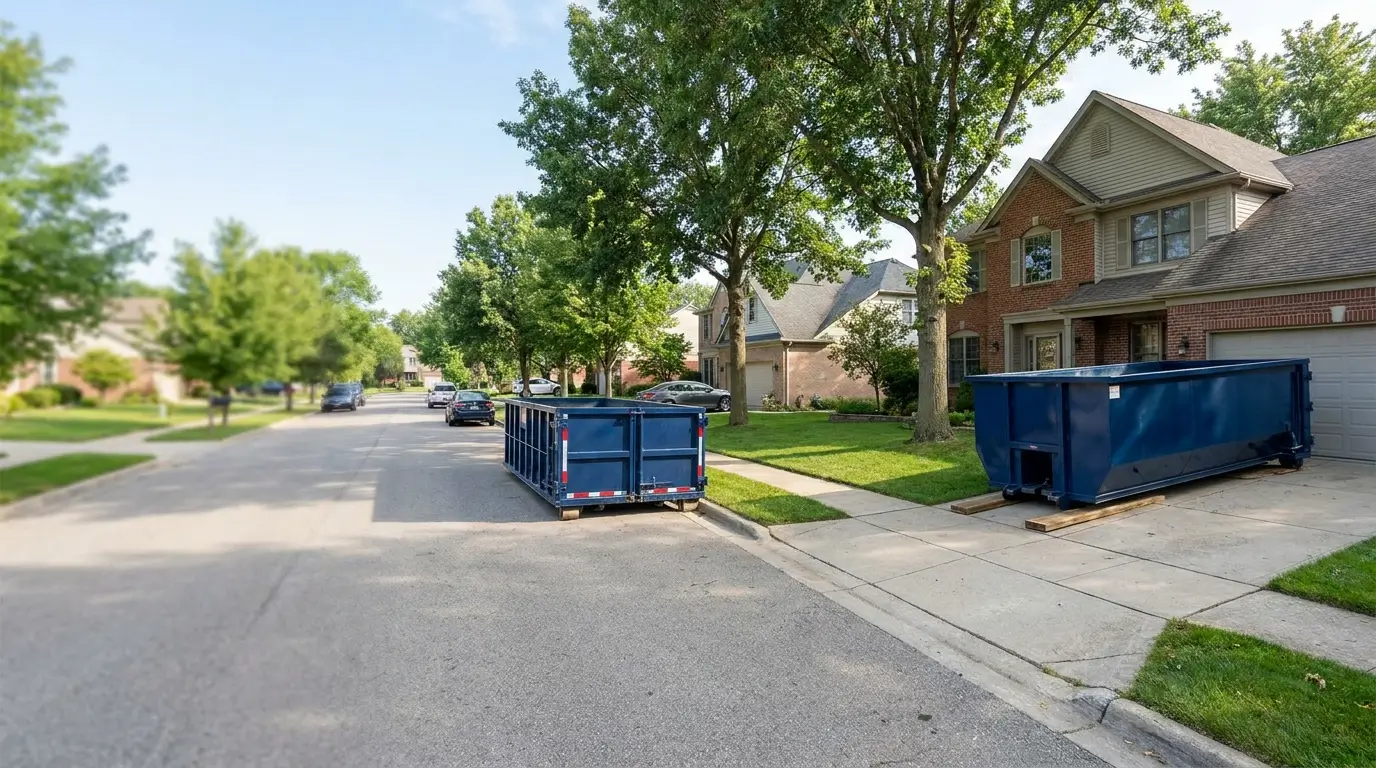
A driveway is often a practical location for a residential dumpster.
If you are considering a street or public right-of-way location, verify the applicable requirements with the City of Warren and the provider before scheduling delivery.
Do not assume that a standard rental automatically authorizes public placement.
Step 8: Coordinate Dumpster Delivery With the Remodeling Schedule
A kitchen remodel often involves multiple stages, and debris is not always produced all at once.
Coordinate dumpster delivery with the demolition schedule so the container is available when needed without paying for unnecessary rental days.
Before Demolition
- Confirm the project scope.
- Identify materials being removed.
- Separate reusable fixtures and appliances.
- Review prohibited materials.
- Estimate the debris volume.
- Select a suitable dumpster size.
- Confirm the delivery date.
During Demolition
- Load accepted debris as it is removed.
- Keep materials organized.
- Separate heavy materials if required.
- Avoid mixing restricted items with general waste.
- Monitor the container’s fill level.
During Construction
New cabinets, flooring, appliances, and fixtures may arrive in packaging.
Ask the provider whether clean cardboard, plastic packaging, and other construction-related materials are accepted.
Keep the container accessible to the workers who need to use it.
Before Final Pickup
- Check that the load is below the fill line.
- Confirm the materials are accepted.
- Ensure the load is not visibly unbalanced.
- Contact the provider to arrange pickup.
- Review any remaining rental days or additional charges.
Step 9: Understand the Costs Before Renting
Dumpster rental pricing depends on several factors, including container size, rental period, weight allowance, material type, and location.
A kitchen remodel may also create special disposal requirements for heavy or restricted materials.
Before booking in Warren, MI, ask the provider to explain the complete rental terms.
Dumpster Size
Confirm the exact size and approximate dimensions of the container.
A smaller dumpster may cost less initially, but it can create additional expenses if another haul or exchange becomes necessary.
Included Weight Allowance
Ask how much weight is included in the quoted price.
This is especially important if the project involves granite, quartz, tile, or other dense materials.
Rental Period
Confirm how many days are included and what additional days cost.
Kitchen renovations can be delayed by contractor scheduling, inspections, product availability, or unexpected repairs.
Delivery and Pickup
Check whether delivery and pickup are included.
Ask whether additional transportation or handling fees may apply.
Special Material Charges
Some materials may have different disposal requirements.
Explain the types of debris you expect to generate before accepting the quote.
Overfilled Container Rules
Ask what happens if debris extends above the fill line.
An overfilled dumpster may not be accepted for transportation until the load is corrected.
For more details, see What Affects Dumpster Rental Cost in Warren, MI?
Step 10: Avoid Common Dumpster Rental Mistakes During a Kitchen Remodel
Planning ahead can help prevent avoidable costs and delays.
Choosing a Dumpster Based Only on Kitchen Size
Square footage does not tell you exactly how much debris a renovation will produce.
Consider the number of cabinets, type of countertop, flooring material, and amount of drywall being removed.
Ignoring Heavy Materials
Stone countertops and tile flooring can add substantial weight.
Discuss these materials before choosing a container.
Putting Appliances in Without Checking
Refrigerators, freezers, and other appliances may have separate disposal requirements.
Confirm acceptance rather than assuming everything can go into the dumpster.
Renting Too Early
If demolition will not begin for several days, early delivery may use up part of the rental period.
Schedule delivery around the actual project timeline.
Underestimating the Rental Period
Unexpected repairs, contractor delays, and material delivery issues can extend a renovation.
Ask about additional rental days before booking.
Loading Above the Fill Line
Do not allow debris to extend above the marked fill line or rim.
Overfilled dumpsters can create transportation hazards and may require unloading or rearrangement before pickup.
Forgetting About Additional Renovation Debris
A kitchen remodel may expand to include a dining area, pantry, or nearby flooring.
If the project scope changes, contact the provider before adding substantially more debris.
Kitchen Remodel Dumpster Rental Checklist
Use this checklist before scheduling your dumpster.
Project planning
- Confirm whether the project is a partial remodel or full demolition.
- List all materials being removed.
- Estimate the amount of cabinet and countertop debris.
- Measure the flooring area.
- Identify drywall, backsplash, and trim removal.
- Determine whether nearby rooms are included.
Material preparation
- Separate reusable cabinets and fixtures.
- Identify appliances requiring special disposal.
- Separate paint, chemicals, and adhesives.
- Identify heavy materials such as stone and tile.
- Check whether recycling options are available.
- Confirm which materials the provider accepts.
Dumpster selection
- Compare 10-, 15-, 20-, and 30-yard options.
- Estimate total debris volume.
- Review the included weight allowance.
- Confirm container dimensions.
- Request a complete rental quote.
Before delivery
- Confirm the delivery date.
- Clear the driveway.
- Check overhead clearance.
- Discuss driveway protection.
- Confirm placement instructions.
- Review the rental period.
During and after demolition
- Load accepted debris safely.
- Distribute weight evenly.
- Keep restricted items separate.
- Stay below the fill line.
- Contact the provider when ready for pickup.
Frequently Asked Questions
What size dumpster is best for a kitchen remodel?
A 10-yard dumpster may work for a small kitchen update with limited demolition debris. A 15-yard or 20-yard container may be more suitable for a moderate or full kitchen remodel. A 30-yard dumpster may be appropriate when the renovation includes nearby rooms or a larger demolition project.
Is a 10-yard dumpster big enough for a kitchen remodel?
It may be sufficient for replacing a few cabinets, removing a small backsplash, or disposing of limited flooring and fixtures. However, a complete kitchen demolition may generate more debris than a 10-yard container can accommodate.
Is a 20-yard dumpster enough for a full kitchen gut?
A 20-yard dumpster may be a practical option for many full kitchen demolition projects. The final requirement depends on the kitchen size, materials being removed, and whether additional rooms are included.
Can I put old kitchen cabinets in a dumpster?
Many providers accept ordinary wood cabinets and similar construction debris. However, acceptance can vary. Confirm the provider’s rules before loading, particularly if cabinets contain unusual materials or attached fixtures.
Can I put granite or quartz countertops in a dumpster?
Some providers may accept stone countertops, but these materials are heavy and can affect the included weight allowance. Ask about acceptance, weight limits, and any special loading requirements before booking.
Can I put ceramic tile in a roll-off dumpster?
Some providers accept ceramic and porcelain tile, but large quantities can create a heavy load. Confirm the weight allowance and whether tile can be mixed with other construction debris.
Can I put a refrigerator in a kitchen remodel dumpster?
Do not assume that refrigerators or freezers are accepted in a standard dumpster. They may contain refrigerants that require proper recovery. Ask about approved disposal arrangements.
Can drywall go in a kitchen remodel dumpster?
Many providers accept drywall as construction debris, but restrictions may vary. Ask whether drywall must be separated from other materials or whether any additional disposal requirements apply.
Should I rent a dumpster before demolition starts?
It is generally best to arrange the rental before demolition begins, with delivery scheduled close to the start of the work. This allows you to remove debris as it is generated without paying for unnecessary rental days.
How long should I keep a dumpster for a kitchen remodel?
The rental period depends on the project’s size and schedule. A small demolition may take only a few days, while a larger renovation can take longer. Confirm the included rental days and additional-day charges before booking.
Can I use one dumpster for kitchen and bathroom remodeling debris?
Possibly, if the provider accepts the materials and the combined volume and weight remain within the container’s limits. Explain both projects when requesting a quote.
What happens if the dumpster becomes overweight?
Additional charges may apply, or the provider may require the load to be adjusted before transportation. The rental agreement determines how weight overages are handled.
Final Thoughts
Choosing the right dumpster for a kitchen remodel starts with understanding the scope of the renovation and the materials being removed.
A small update involving limited cabinet and backsplash removal may only require a 10-yard container. A moderate renovation may need a 15-yard or 20-yard dumpster, while a full kitchen gut or a project involving multiple rooms may justify a larger option.
Pay close attention to heavy materials such as granite, quartz, marble, and tile. These can reach the weight allowance before the container is full. Also confirm the disposal requirements for appliances, chemicals, and other restricted materials.
For homeowners in Warren, Michigan, and nearby communities, planning dumpster delivery around the demolition schedule can make debris removal more manageable.
Warren Dumpster Rental helps connect customers with independent dumpster rental providers serving Warren, Michigan and nearby communities where coverage is available. The matched provider handles availability, rental arrangements, pricing, billing, delivery, and pickup.
Before scheduling a rental, prepare a list of the materials being removed, estimate the debris volume, and review the provider’s weight and disposal requirements. A well-planned dumpster rental can help keep your kitchen remodeling project organized from demolition through cleanup.