Removing an old patio, wooden deck, or damaged fence can make a property more attractive, safer, and easier to maintain. However, demolition creates more waste than many homeowners initially expect. Even a modest backyard project can produce piles of lumber, concrete, pavers, posts, railings, fasteners, soil, and other construction debris.
Planning waste removal before demolition begins can make the project more organized and help prevent unnecessary disposal costs. A roll-off dumpster is one option for managing the debris, particularly when several outdoor structures are being removed at the same time.
For homeowners planning a project in Warren, Michigan, the important questions include how much debris the job will produce, which dumpster size is appropriate, whether heavy materials require special handling, and where the container can safely be placed.
This guide explains how to plan dumpster rental for patio, deck, and fence removal, including material separation, weight limits, loading strategies, and practical considerations for outdoor demolition projects.
Why Patio, Deck and Fence Removal Creates So Much Waste
Outdoor demolition projects often involve several different materials. A structure that looks relatively small from the outside can contain a surprising amount of waste once it is dismantled.
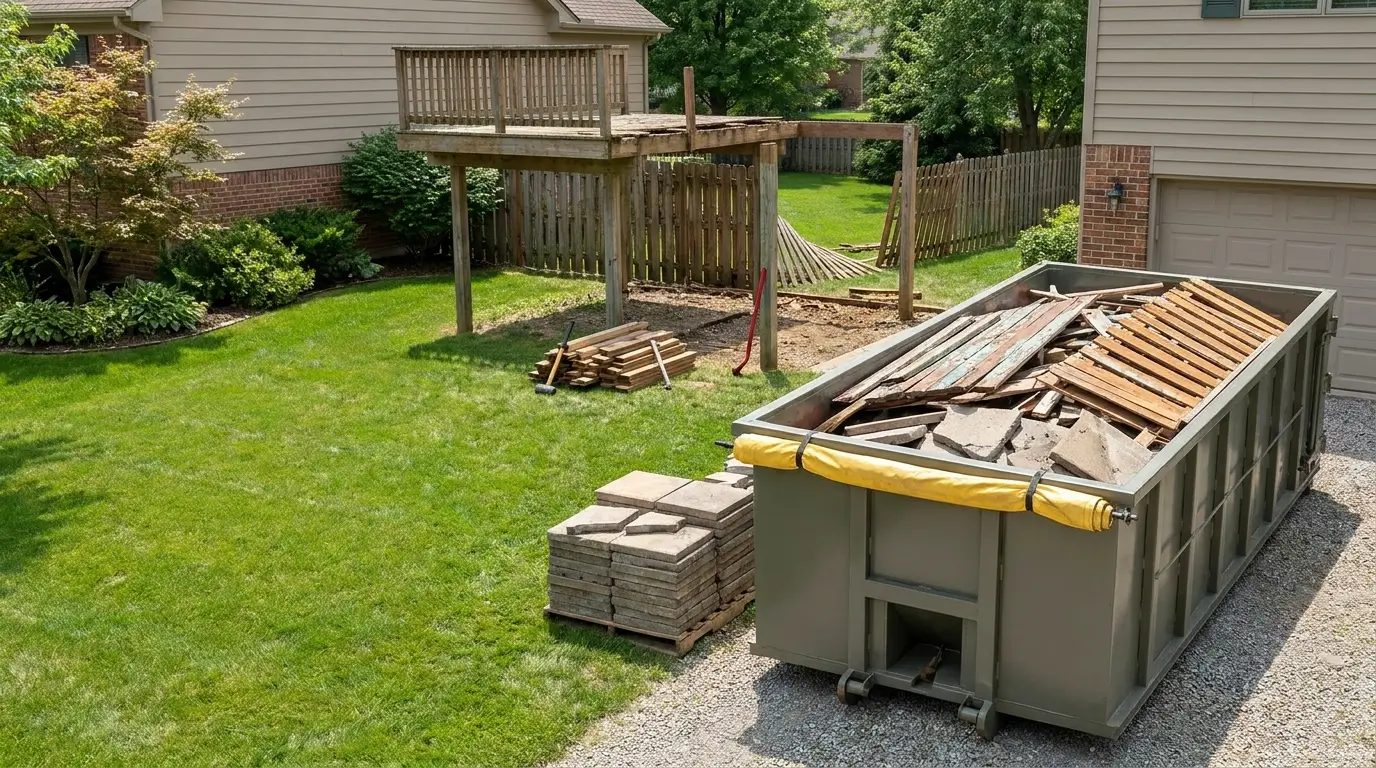
For example, removing a backyard deck may involve:
- Deck boards and support joists
- Beams and posts
- Stair treads and stringers
- Railings and balusters
- Screws, nails, brackets, and metal connectors
- Concrete footings or post bases
- Old lattice panels and decorative trim
A patio removal project can produce a different combination of materials, including concrete slabs, pavers, bricks, stone, sand, gravel, and landscape edging.
Fence removal may generate wooden panels, posts, rails, metal sections, concrete post footings, and hardware.
These materials do not all have the same disposal requirements. Wood is generally much lighter than concrete, while soil, masonry, and other dense materials can reach a dumpster’s weight allowance quickly.
Understanding the materials involved is the first step toward choosing an appropriate container.
1. Estimate the Debris Before Choosing a Dumpster
A common mistake is selecting a dumpster based only on the size of the structure being removed. The dimensions of a patio, deck, or fence provide useful information, but they do not tell the whole story.
The amount of waste depends on the construction materials, thickness, condition, and demolition method.
Deck removal debris
A wooden deck measuring 12 by 16 feet has a surface area of 192 square feet. However, the total amount of debris will include more than the visible deck boards.
The frame, beams, support posts, stairs, and railing system all contribute to the final volume.
An elevated deck may also have larger structural components than a simple ground-level platform. If the project includes removing concrete footings, the weight can increase significantly.
Before requesting a dumpster, estimate:
- Total deck surface area
- Number of decking boards
- Approximate dimensions of the support frame
- Number of stairs and railings
- Whether posts and concrete footings will be removed
- Whether the wood is treated, painted, or coated
Patio removal debris
Patio demolition can be particularly challenging because concrete, brick, and natural stone are dense materials.
A patio made from thin pavers may produce a different debris volume from a thick poured-concrete slab of the same surface area.
Consider the following:
- Patio dimensions
- Concrete thickness, if applicable
- Number and thickness of pavers
- Amount of underlying sand or gravel
- Whether the base material will also be removed
- Whether excavated soil will need separate disposal
A relatively small concrete patio can become a heavy disposal project. Do not assume that a large dumpster can accept an entire concrete slab simply because it has enough physical space.
Fence removal debris
Fence removal is usually easier to estimate by measuring the total fence length and identifying the construction type.
A wood privacy fence may produce long boards and heavy support posts. A chain-link fence may produce less bulky waste but includes metal mesh, posts, rails, and hardware.
Record:
- Total fence length
- Fence height
- Number of panels or sections
- Number of posts
- Post material
- Whether concrete footings will be removed
- Whether gates and decorative features are included
Separating these estimates makes it easier to discuss the project with a dumpster provider.
2. Choose the Right Dumpster Size for Your Project
Dumpster size is usually measured in cubic yards. A cubic yard represents a volume of 3 feet by 3 feet by 3 feet.
Common roll-off dumpster options include 10, 15, 20, 30, and 40-yard containers, although actual availability varies by provider.
The right size depends on the amount of debris, the type of material, the available placement area, and the container’s weight allowance.
| Dumpster size | Potential project use |
|---|---|
| 10-yard | Small fence removal or limited deck demolition |
| 15-yard | Moderate deck or fence removal |
| 20-yard | Larger deck removal or combined outdoor cleanup |
| 30-yard | Extensive deck, fence, and general renovation debris |
| 40-yard | Large-volume, relatively lightweight demolition debris |
These are general planning examples, not guaranteed capacities for every project. A provider may recommend a smaller container for dense materials or a specialized container for concrete and masonry.
When a 10-yard dumpster may work
A 10-yard container may be suitable for a small project involving a limited amount of wood decking, fence panels, or general outdoor debris.
It may be worth considering when:
- A small ground-level deck is being dismantled
- Only a section of fencing is being replaced
- A few old patio features are being removed
- The project produces a relatively limited amount of lightweight waste
However, a small dumpster may not be suitable for a concrete-heavy project. Always check the weight allowance before ordering.
When a 15-yard dumpster may be appropriate
A 15-yard dumpster can provide additional room for a moderate outdoor demolition project.
Possible applications include:
- Removing a medium-sized wooden deck
- Replacing several fence sections
- Disposing of deck boards, railings, and framing
- Combining fence removal with a backyard cleanup
The actual container recommendation depends on the structure and materials being removed.
When to consider a 20-yard dumpster
A 20-yard dumpster may be useful for a larger deck project or when multiple outdoor structures are being dismantled.
For example, a homeowner might remove an aging deck, take down a section of wooden privacy fencing, and clear out old outdoor construction materials during the same project.
The additional volume can reduce the need to arrange another container, provided the debris remains within the weight allowance.
When larger dumpsters make sense
A 30- or 40-yard dumpster may be appropriate for larger demolition projects involving substantial amounts of lightweight debris.
These containers can be useful when a contractor is removing multiple structures or coordinating a larger property renovation.
However, a larger container is not automatically the best option. If the waste consists primarily of concrete, brick, or stone, a smaller container designed for heavy materials may be more appropriate.
For more guidance, read 10 vs 15 vs 20 Yard Dumpster: Which One Do You Need? and 20 Yard vs 30 Yard Dumpster for Remodels and Cleanouts.
3. Understand the Difference Between Lightweight and Heavy Demolition Debris
Material weight is one of the most important considerations when arranging a dumpster for patio, deck, or fence removal.
A container can become overweight before it looks full. This is especially common when homeowners dispose of concrete, brick, stone, soil, or other dense materials.
Lightweight materials
Some common outdoor demolition materials are relatively light compared with masonry and soil.
Examples include:
- Untreated wood boards
- Wooden fence panels
- Deck railings
- Lattice sections
- Lightweight trim
- Certain metal components
Even lightweight materials can occupy substantial space when they are long or irregularly shaped.
Heavy materials
Other demolition materials can add considerable weight:
- Concrete slabs
- Brick pavers
- Natural stone
- Concrete fence-post footings
- Soil and compacted dirt
- Gravel and crushed stone
- Mortar and masonry debris
Before placing these materials in a rental dumpster, ask whether the provider accepts them and whether a dedicated heavy-debris container is available.
Some providers restrict concrete, brick, and dirt to smaller containers or require separate arrangements.
Why concrete needs special attention
Concrete is particularly dense. A relatively small quantity can weigh several tons depending on its thickness and composition.
For this reason, removing a concrete patio may require a different disposal plan from removing a wooden deck.
Ask the provider:
- Is concrete accepted?
- Is there a maximum amount of concrete allowed?
- Is a dedicated concrete container required?
- What is the container’s weight allowance?
- Are concrete and soil permitted in the same container?
- Are additional charges applied when the weight allowance is exceeded?
Do not load a standard mixed-debris dumpster with a large quantity of concrete without approval.
For additional guidance, see Concrete, Brick and Dirt: How to Dispose of Heavy Debris.
4. Separate Materials Before Loading the Dumpster
Sorting materials before and during demolition can make waste management easier.
It can also help identify materials that require separate disposal arrangements.
Separate wood from concrete
If you are removing a wooden deck with concrete footings, separate the boards and framing from the concrete whenever practical.
This makes it easier to estimate the amount of each material and determine whether a mixed-debris container is suitable.
Separate metal components
Decks and fences may contain metal brackets, screws, nails, hinges, gates, and other hardware.
Where practical, separate recyclable metal from general construction debris. Ask the disposal provider whether it accepts mixed metal or requires it to be handled separately.
Keep soil and landscaping debris separate
Removing a patio or fence may involve disturbing soil, gravel, sod, roots, and landscaping materials.
These materials may have different acceptance requirements from ordinary demolition debris.
Do not assume that a dumpster accepting construction debris also accepts unlimited quantities of dirt, sod, or landscaping waste.
Identify treated or coated wood
Older outdoor structures may contain pressure-treated, painted, stained, or otherwise coated wood.
Tell the provider what type of wood you are removing. Material acceptance rules vary, and some disposal or recycling facilities handle treated wood differently from clean untreated lumber.
Sorting the debris before loading can prevent problems when the container is collected.
5. Plan the Dumpster Placement Before Demolition Begins
Choosing the right container is only part of the planning process. You also need a suitable location for delivery and loading.
A roll-off dumpster requires enough space for the container and the delivery vehicle to maneuver safely.
For a residential project in Warren, consider the following placement factors.
Driveway space
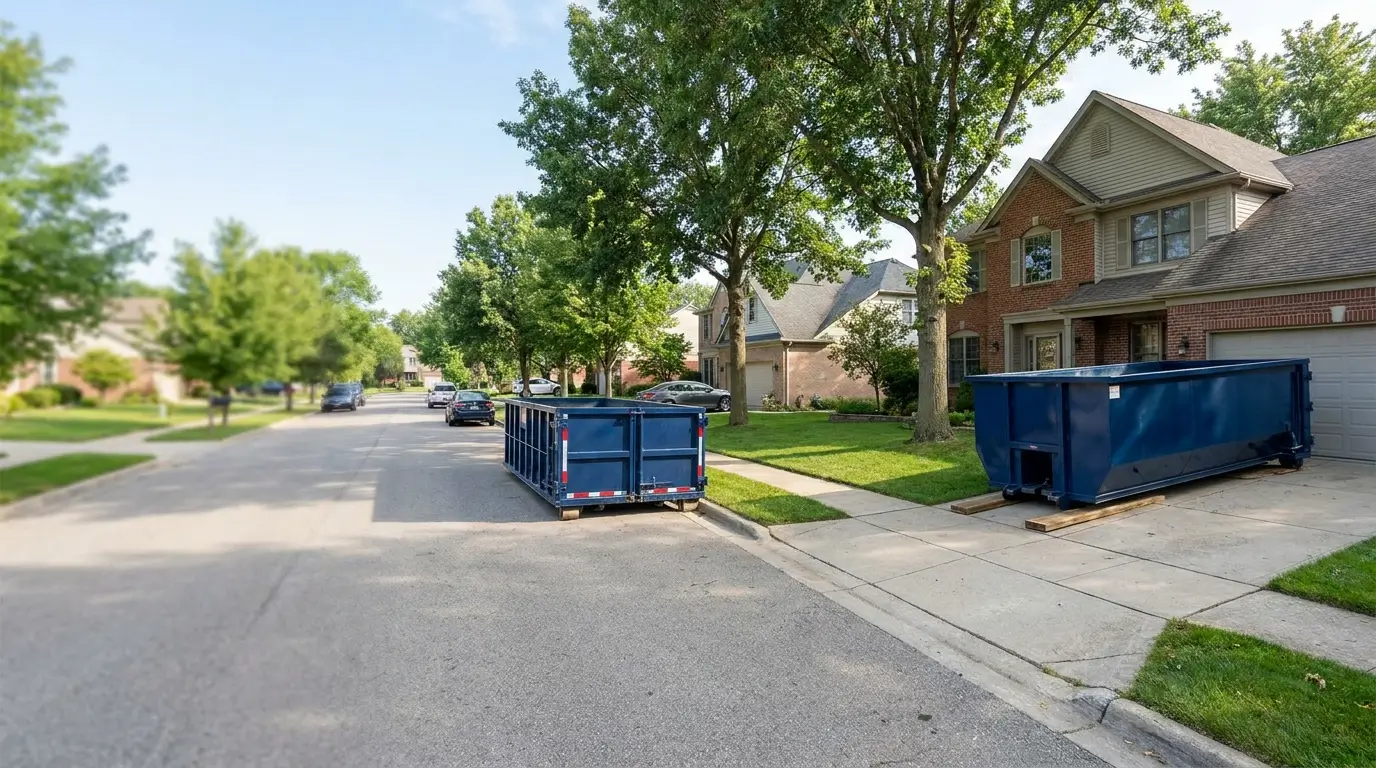
A driveway is often the most convenient location for a temporary dumpster.
Before delivery, check:
- Available driveway length and width
- Vehicle access and turning space
- Overhead branches and utility lines
- Garage access
- Slope and surface condition
- Distance between the dumpster and demolition area
A container should not block essential access or create an unnecessary safety hazard.
Protect the driveway surface
Roll-off containers are heavy, and delivery equipment can place significant pressure on the surface beneath them.
Discuss driveway protection with the provider before delivery.
Depending on the surface and equipment, protective boards may help distribute contact pressure and reduce the chance of scratches or other damage. However, protection cannot guarantee that an existing or weak driveway will not crack.
Photograph the placement area before delivery and discuss any concerns about concrete condition, asphalt, pavers, or landscaping.
Keep sidewalks and access routes clear
Do not position the container where it obstructs pedestrian access, neighboring driveways, visibility, or emergency access.
If the driveway is not suitable, ask the provider about alternative placement options before scheduling delivery.
Check Warren placement requirements
Warren property owners should verify local requirements before placing a temporary roll-off container in a location that may involve public property or a right-of-way.
The City of Warren provides building, zoning, and code information through its Building Division. Its demolition documentation also emphasizes protecting sidewalks, curbs, hydrants, utilities, and other public infrastructure during demolition work.
Do not assume that a dumpster can be placed on a street, sidewalk, or public right-of-way simply because there is not enough room in the driveway. Confirm the applicable requirements with the City and the provider before delivery.
The City Building Division can be contacted at (586) 574-4504 for building-related questions. City of Warren Building Division.
6. Check Permit Requirements for Deck and Fence Work
Dumpster planning and demolition permits are separate considerations.
A dumpster provider can explain container requirements, but it does not replace the need to check local building or zoning rules.
The City of Warren lists deck-related information, fence permits, and other construction applications through its Building Division.
Its public guidance states that deck and porch construction requires a permit and supporting plans. The requirements for removing an existing structure may depend on the scope of work and whether the project includes rebuilding, structural changes, or other regulated activity.
Similarly, the City states that permits are required before constructing new fences or rebuilding existing fences.
Before beginning a project:
- Contact the City Building Division if you are unsure whether your work requires a permit.
- Ask whether the project involves structural, zoning, or inspection requirements.
- Check applicable rules before rebuilding a deck or fence.
- Confirm whether contractor work requires additional documentation.
The City’s Building Division provides permit applications and information at its official website.
Useful references:
7. Prepare the Deck, Patio, or Fence for Demolition
Good preparation can make demolition and dumpster loading more efficient.
Before work begins, identify utilities, access routes, landscaping features, and any materials that should not be mixed with general debris.
Prepare a wooden deck
A typical deck removal project may involve several stages:
- Remove outdoor furniture, planters, grills, and personal belongings.
- Take down railings and removable accessories.
- Remove decking boards carefully.
- Dismantle stairs and structural framing.
- Remove support posts if included in the project.
- Address concrete footings separately.
- Sort the resulting materials for disposal.
Deck boards and framing can contain exposed nails and screws. Keep the work area organized and handle sharp materials carefully.
If the deck is elevated, unstable, attached to the house, or structurally compromised, consider hiring a qualified contractor rather than attempting an uncontrolled demolition.
Prepare a concrete patio
Concrete removal generally requires more specialized equipment and planning than ordinary wood demolition.
Before breaking up the patio:
- Confirm the concrete thickness.
- Identify nearby utility lines and structures.
- Determine whether the base material will also be removed.
- Confirm the provider’s concrete acceptance requirements.
- Estimate the weight before arranging the container.
Breaking concrete into smaller pieces can make handling easier, but it does not reduce the total weight.
Avoid loading concrete until the provider confirms the appropriate container and loading limits.
Prepare a fence
Fence removal can involve long panels, posts, gates, and buried footings.
A practical sequence is:
- Remove gates and hardware.
- Detach fence panels or individual boards.
- Remove horizontal rails.
- Expose and remove posts where required.
- Determine how concrete footings will be handled.
- Cut accepted materials into manageable sections.
Check property boundaries before removing a shared or boundary fence. If the fence is shared with a neighbor, discuss the work and responsibility for replacement or removal beforehand.
8. Load the Dumpster Safely and Efficiently
Once the dumpster arrives, the way debris is loaded affects how much material fits and whether the container can be transported safely.
Break down bulky wood
Long deck boards and fence panels can leave large empty spaces inside a container.
Where safe and practical, cut or dismantle materials into manageable sections. This helps reduce wasted space and makes loading more organized.
Avoid creating pieces that are too long or awkward to handle.
Distribute debris evenly
Place heavier approved materials according to the provider’s loading instructions.
Do not concentrate heavy debris in one area or exceed the container’s permitted load.
An uneven load can create transportation and safety problems.
Keep debris below the fill line
Most roll-off containers have a designated fill line or loading limit.
Do not allow boards, railings, posts, or other materials to extend above the container walls. Overfilled containers may not be safe or eligible for pickup.
Keep sharp materials controlled
Old deck boards and fence sections may contain exposed nails, screws, splinters, or metal edges.
Load these materials carefully to reduce the risk of injury. Avoid throwing sharp objects toward people working nearby.
Do not place prohibited items in the container
A general construction dumpster is not automatically suitable for every material found during demolition.
Items such as hazardous chemicals, certain paints, oils, batteries, tires, and other restricted materials may require separate disposal arrangements.
Ask the provider for its accepted-material list before loading questionable items.
For a broader explanation, read What Can You Put in a Roll-Off Dumpster?.
9. Understand Dumpster Rental Costs for Outdoor Demolition
The cost of renting a dumpster for patio, deck, or fence removal depends on several factors.
There is no single price that applies to every project. The final quote may depend on container size, material type, weight allowance, rental duration, delivery location, and additional service requirements.
Dumpster size
A larger container generally has a different rental rate from a smaller one.
However, selecting the largest available option is not always economical. The goal is to choose a container that accommodates the expected debris without exceeding its weight restrictions.
Debris weight
Weight is especially important for patio removal.
Concrete, brick, stone, and soil can create substantial disposal weight even when the dumpster is not full.
Ask whether the quote includes a specific weight allowance and how additional weight is charged.
Rental duration
Some outdoor demolition projects can be completed quickly, while others take several days because of contractor schedules, weather, or unexpected structural issues.
Confirm the included rental period and the process for requesting additional days.
Material restrictions
Some providers charge differently for concrete, masonry, treated wood, or other specialized materials.
Others may not accept certain debris types at all.
Confirm acceptance before placing the order.
Delivery and pickup conditions
Placement difficulties, restricted access, or special delivery requirements may affect the quote.
Give the provider accurate information about the property and intended location.
For a closer look at pricing factors, read What Affects Dumpster Rental Cost in Warren, MI? and 7 Ways to Lower Your Dumpster Rental Bill.
10. Avoid Common Dumpster Planning Mistakes
A little preparation can help prevent delays, unexpected charges, and unnecessary handling.
Choosing a dumpster without estimating debris
A container that is too small may fill before demolition is complete. An unnecessarily large container may cost more than the project requires.
Measure the structure and estimate the materials before requesting a quote.
Ignoring weight limits
Concrete, dirt, brick, and stone can make a dumpster overweight quickly.
Always discuss heavy debris before delivery.
Mixing materials without checking acceptance rules
A provider may accept ordinary wood demolition debris but restrict concrete, soil, or treated materials.
Ask for approval rather than assuming all construction waste is interchangeable.
Waiting until demolition starts to arrange disposal
If the dumpster is not available when demolition begins, debris may accumulate in the yard or driveway.
Coordinate delivery with the project schedule.
Blocking access
A poorly placed container can interfere with vehicles, garage doors, sidewalks, or neighboring properties.
Confirm the placement area before delivery.
Forgetting about additional rental days
Demolition can take longer than expected.
Ask about rental-period extensions before the original pickup date rather than waiting until the container is due for collection.
11. A Practical Dumpster Planning Checklist
Use this checklist before arranging a dumpster for an outdoor demolition project.
Project assessment
- Measure the deck, patio, or fence.
- Identify all materials being removed.
- Estimate the amount of wood, metal, concrete, and other debris.
- Determine whether footings, soil, or base materials are included.
- Identify any materials requiring separate disposal.
Dumpster selection
- Compare available container sizes.
- Confirm the weight allowance.
- Ask whether concrete and masonry are accepted.
- Confirm restrictions on treated wood and other special materials.
- Request a complete quote.
Property preparation
- Choose a suitable delivery location.
- Check driveway condition and available space.
- Identify overhead obstructions.
- Keep sidewalks and access routes clear.
- Confirm any applicable local requirements.
Project scheduling
- Arrange delivery before demolition begins.
- Coordinate the rental period with the contractor.
- Plan how debris will be sorted and loaded.
- Confirm the pickup process.
- Keep the container within its fill and weight limits.
12. How Warren Dumpster Rental Can Help With Project Planning
Planning a backyard demolition project involves more than finding a place to put unwanted materials. Homeowners need to consider container size, debris type, weight restrictions, access, and collection timing.
Warren Dumpster Rental helps connect customers with independent dumpster rental providers serving Warren, Michigan, and nearby communities where coverage is available.
The matched provider handles rental availability, pricing, delivery arrangements, billing, and pickup.
When requesting information, explain whether you are removing a wooden deck, concrete patio, privacy fence, chain-link fence, or several structures at once.
It is also helpful to provide approximate dimensions and identify any concrete footings, masonry, soil, or other heavy materials.
This information helps the provider evaluate the project and discuss an appropriate container.
Whether you are replacing an aging deck, removing a damaged fence, or clearing an old patio before a backyard renovation, planning disposal in advance can make the work more organized.
Frequently Asked Questions
What size dumpster do I need for deck removal?
The appropriate size depends on the deck’s dimensions, construction materials, and whether the frame, stairs, railings, and concrete footings are also being removed. A smaller container may work for a limited project, while a larger deck may require a 15- or 20-yard option. Confirm the expected debris volume and weight with the provider.
Can I put an entire wooden deck in a dumpster?
Many providers accept ordinary wooden deck demolition debris, but acceptance depends on their material rules. Tell the provider whether the wood is pressure-treated, painted, stained, or coated, and confirm whether metal hardware and other components can be included.
Can concrete patio pieces go in a regular roll-off dumpster?
Not necessarily. Concrete is heavy, and many providers restrict the amount that can go into a standard mixed-debris container. Some require a dedicated heavy-material container. Confirm acceptance and weight limits before loading concrete.
How much dumpster space does fence removal require?
The amount depends on fence length, height, construction type, and the number of posts and gates. A short section of fencing may fit in a smaller container, while a full privacy fence around a property can produce considerably more debris. Measuring the fence and identifying its materials will help with the estimate.
Can I put fence posts with concrete attached into a dumpster?
That depends on the provider’s material restrictions and weight limits. Concrete attached to fence posts can add substantial weight. Ask whether the provider accepts these materials and whether the concrete must be separated.
Can I mix deck boards, fence panels, and patio pavers?
Some providers allow mixed construction debris, but heavy masonry may be restricted or subject to special weight limits. Ask before combining wood, metal, pavers, and concrete in one container.
Should I rent a larger dumpster to avoid running out of space?
Not automatically. A larger container may be useful for bulky, lightweight materials, but it may not solve a weight problem involving concrete, brick, or soil. Estimate both volume and weight before selecting a size.
How long should I rent a dumpster for deck or fence removal?
The required rental period depends on project size, labor availability, and whether the work is being completed by a contractor or homeowner. Confirm the included rental period and additional-day charges before scheduling delivery.
Can a dumpster be placed on the street in Warren, MI?
Do not assume street or public right-of-way placement is permitted. Check the applicable City requirements and confirm the proposed location with the provider before delivery. A driveway or another suitable private-property location may be preferable when available.
Do I need a permit to remove a deck or fence in Warren?
Permit requirements depend on the scope of work. The City of Warren provides building and fence-related information through its Building Division. Contact the department at (586) 574-4504 if you are unsure whether your project requires a permit or other approval.
What should I do with soil and landscaping debris from patio removal?
Soil, sod, roots, and landscaping materials may have different acceptance rules from ordinary construction debris. Ask the dumpster provider whether these materials are permitted. Do not assume that a container accepting wood or concrete also accepts excavated soil.
Can I remove my deck and fence at the same time?
Combining projects can be convenient because it may allow you to coordinate one demolition schedule and one waste-removal arrangement. However, estimate the combined debris volume and weight carefully. A deck frame, fence panels, concrete footings, and other materials may require different disposal arrangements.
Final Thoughts
Patio, deck, and fence removal can produce a mixture of bulky and heavy demolition debris. Choosing the right dumpster requires more than estimating the visible size of the structure. Material type, weight restrictions, concrete disposal rules, driveway access, and rental duration all matter.
For homeowners in Warren, Michigan, the best approach is to measure the project, separate lightweight and heavy materials, confirm the provider’s acceptance rules, and arrange a suitable container before demolition begins.
With a clear disposal plan, you can keep the work area organized, reduce avoidable delays, and make your outdoor renovation easier to manage.