When renting a dumpster, most people focus on the rental price, container size, and delivery schedule. However, there is another important factor that can significantly affect the final cost: weight limits.
A dumpster rental quote usually includes a specific weight allowance. This is the maximum amount of debris you can dispose of without paying additional charges. If your load exceeds that allowance, the rental provider may charge an overweight fee based on the extra tonnage.
Weight-related charges can catch homeowners, contractors, and property managers by surprise, especially when disposing of materials such as concrete, roofing shingles, dirt, brick, drywall, and tile. These materials may not take up much space inside a container, but they can add considerable weight.
Understanding dumpster weight limits before scheduling your rental can help you avoid unexpected expenses and choose the right container for your project.
In this guide, we explain how dumpster weight allowances work, what materials are considered heavy, how overage fees are calculated, and what you can do to keep your final rental bill under control.
What Are Dumpster Weight Limits?
A dumpster weight limit is the maximum amount of debris included in your rental price. It is usually measured in tons and represents the weight allowance provided by the rental company.
For example, suppose you rent a 20-yard dumpster with a 3-ton weight allowance. This means your rental quote includes disposal of up to 3 tons of material.
If the dumpster weighs 3.5 tons when it reaches the disposal facility, you may be charged an additional fee for the extra 0.5 ton.
Weight allowances are important because dumpster rental companies typically pay disposal facilities based on the weight of the waste they bring in. When a container exceeds its included allowance, the additional disposal cost may be passed on to the customer.
Not every dumpster rental comes with the same weight allowance. The included tonnage can depend on several factors, including:
- Dumpster size and container capacity
- Type of debris being disposed of
- Local landfill or transfer station fees
- Rental duration
- Disposal restrictions
- The rental provider’s pricing structure
This is why it is important to review the weight allowance before accepting a rental quote. A low advertised rental price may not represent the complete cost if the included tonnage is limited.
How Do Dumpster Overage Fees Work?
Dumpster overage fees are additional charges that apply when the weight of your debris exceeds the allowance included in your rental agreement.
The process is generally straightforward.
First, the rental company provides a dumpster with a specific weight allowance. You fill the container with approved materials during your rental period. Once the dumpster is picked up, it is transported to an approved disposal facility, where the loaded container is weighed.
The disposal facility records the weight of the loaded dumpster and subtracts the weight of the empty container. This calculation determines the actual weight of the debris.
If the debris weighs more than the included allowance, the provider calculates an overweight charge according to its pricing policy.
Example of a Dumpster Overweight Charge
Imagine you rent a dumpster with the following terms:
- Included weight: 3 tons
- Actual debris weight: 3.6 tons
- Excess weight: 0.6 ton
- Overage rate: $75 per additional ton
Your additional charge would be:
0.6 × $75 = $45
In this example, the customer would pay an additional $45 beyond the original rental price.
These figures are for illustration only. Actual weight allowances and overage rates vary by provider, location, material type, and disposal facility.
Before renting, ask whether overweight charges are calculated by the exact fraction of a ton or rounded up to the next full ton. This small detail can make a difference in your final bill.
Why Does Weight Matter More Than How Full Your Dumpster Looks?
One of the most common misunderstandings about dumpster rentals is assuming that a half-full dumpster is automatically under its weight limit.
Unfortunately, that is not always true.
Dumpster capacity is measured in cubic yards, which tells you how much space a container provides. Weight is measured separately, usually in pounds or tons.
A dumpster can be filled only halfway and still exceed its weight allowance if it contains dense materials.
For example, a container filled with old furniture, cardboard, and household items may remain relatively light even when it is nearly full. However, a smaller amount of concrete, brick, dirt, or roofing shingles can reach the weight limit much faster.
This distinction is particularly important for construction and renovation projects.
When selecting a dumpster, you need to consider both:
- Volume: How much space your debris will occupy.
- Weight: How heavy your debris will be when disposed of.
Choosing a container based only on its cubic-yard capacity can result in unexpected overweight charges.
Common Materials That Can Increase Dumpster Weight
Different types of debris have different weights. Some materials are relatively lightweight and bulky, while others are dense and heavy.
Understanding the materials you plan to dispose of can help you estimate whether your dumpster will stay within its weight allowance.
1. Concrete
Concrete is one of the heaviest materials commonly generated during construction, demolition, and renovation projects.
A cubic yard of ordinary concrete can weigh approximately 2 tons, depending on its composition, moisture content, and aggregate.
Even a relatively small amount of concrete can add substantial weight to a dumpster.
Common concrete disposal projects include:
- Removing old driveways
- Breaking up sidewalks
- Demolishing concrete patios
- Removing garage floors
- Disposing of concrete steps
- Renovating foundations
If your project involves a significant amount of concrete, ask your dumpster provider whether a dedicated heavy-debris container is required.
2. Roofing Shingles
Roofing shingles can become surprisingly heavy when removed from a roof.
Asphalt shingles, underlayment, nails, and other roofing materials can add up quickly. Multiple layers of old shingles make the load even heavier.
Roofing projects often generate large amounts of debris, but the weight can become a problem before the dumpster reaches its maximum volume.
When planning a roofing project, ask about the weight allowance for roofing debris and whether the provider offers containers specifically suited to roofing jobs.
3. Dirt and Soil
Dirt is another material that requires careful planning.
Dry soil is heavy, and wet soil can weigh significantly more because of its moisture content. Clay-rich soil, compacted earth, and muddy excavation waste can be particularly dense.
Common projects that generate soil include:
- Landscaping improvements
- Garden renovations
- Excavation work
- Patio installation
- Yard grading
- Foundation projects
If you are removing soil, make sure your provider accepts it and confirms the appropriate container and weight restrictions.
4. Brick and Masonry
Bricks, blocks, stone, and masonry debris are dense construction materials.
A small pile of broken bricks may look manageable, but the weight can quickly approach the included tonnage of a standard dumpster.
These materials are commonly generated during:
- Chimney demolition
- Wall removal
- Patio renovations
- Masonry repairs
- Building demolition
For large quantities of brick or stone, a dedicated heavy-material rental may be more appropriate.
5. Drywall
Drywall is generally lighter than concrete or brick, but large renovation projects can generate substantial quantities.
A standard 4-by-8-foot sheet of half-inch drywall weighs approximately 50 pounds, although actual weight varies by manufacturer and moisture content.
If you remove drywall from several rooms, the combined weight can become significant.
Wet or water-damaged drywall can be much heavier than dry material. Always check disposal requirements before placing damaged drywall in a dumpster.
6. Tile and Flooring Materials
Tile, ceramic flooring, porcelain, and natural stone are considerably heavier than many homeowners expect.
A bathroom or kitchen renovation may produce a relatively small volume of tile debris, but the material can quickly add weight.
Other flooring materials that may contribute to dumpster weight include:
- Hardwood flooring
- Laminate flooring
- Vinyl flooring
- Carpet padding
- Ceramic tile
- Natural stone
If your renovation involves removing several layers of flooring, discuss the expected weight with your rental provider.
How Much Weight Can a Dumpster Hold?
Dumpster sizes are generally advertised by volume rather than a universal weight capacity.
However, most rental agreements include a specific weight allowance for each container.
The allowance can vary depending on the provider, debris type, and local disposal costs.
Here is a general example of how rental companies may structure weight allowances:
| Dumpster Size | Typical Project | Weight Allowance |
|---|---|---|
| 10-yard | Small cleanouts | Provider-specific |
| 15-yard | Flooring and small renovations | Provider-specific |
| 20-yard | Household and construction debris | Provider-specific |
| 30-yard | Larger remodeling projects | Provider-specific |
| 40-yard | Large cleanouts and commercial projects | Provider-specific |
A larger dumpster does not necessarily mean you can dispose of unlimited weight.
In fact, a container with more cubic-yard capacity may still have a weight allowance that is unsuitable for particularly dense materials.
Always compare the included tonnage rather than assuming that container size determines how much weight you can dispose of.
How to Calculate Your Potential Dumpster Overage Fees
You do not need advanced equipment to understand how overweight charges are calculated. A basic calculation can help you estimate your potential additional costs.
Use this formula:
Actual Debris Weight − Included Weight Allowance = Excess Weight
Then:
Excess Weight × Overage Rate = Additional Charge
Example 1: Small Residential Cleanout
Suppose you rent a 10-yard dumpster with a 1-ton allowance.
After your garage cleanout, the disposal facility records 1.2 tons of debris.
Your excess weight is:
1.2 − 1.0 = 0.2 ton
If the provider charges $80 per additional ton:
0.2 × $80 = $16
Your estimated overweight charge would be $16.
Example 2: Kitchen Renovation
Imagine you rent a 20-yard dumpster with a 3-ton allowance.
Your renovation produces 3.8 tons of debris, including cabinets, drywall, flooring, and tile.
Your excess weight is:
3.8 − 3.0 = 0.8 ton
At an illustrative rate of $90 per additional ton:
0.8 × $90 = $72
The additional overweight fee would be $72.
Example 3: Roofing Project
A roofing contractor rents a dumpster with a 4-ton allowance. The final debris weight reaches 5.2 tons.
The excess weight is:
5.2 − 4.0 = 1.2 tons
If the overage rate is $100 per ton:
1.2 × $100 = $120
The customer may receive an additional $120 charge.
These examples demonstrate why knowing your weight allowance and overage rate before renting is important.
Actual billing methods can differ. Some companies round weight upward, apply minimum charges, or use different rates for specific debris types. Review your rental agreement for the exact calculation method.
How to Stay Under Your Dumpster Weight Limit
Avoiding overweight charges starts before the dumpster arrives. A little planning can help you control disposal costs and prevent problems during pickup.
Here are several practical ways to manage dumpster weight.
1. Ask About the Included Weight Allowance
Before booking, confirm exactly how many tons are included in your rental price.
Do not rely on general estimates or assumptions based on dumpster size.
Ask your provider:
- How many tons are included?
- What is the overweight fee per ton?
- Are partial tons charged proportionally?
- Is the weight allowance different for construction debris?
- Are there separate disposal fees for certain materials?
Getting these details in advance makes it easier to compare rental quotes accurately.
2. Identify Heavy Materials Before Renting
Make a list of the materials your project will generate.
For example, a garage cleanout may involve cardboard, furniture, plastic containers, and general household waste. A bathroom renovation may involve tile, drywall, cement board, and plumbing fixtures.
The second project is likely to produce a denser load.
Knowing the difference helps you select a container with an appropriate weight allowance.
3. Avoid Mixing Heavy Materials With Bulky Debris
If your project includes concrete, dirt, brick, or tile, ask whether these materials should be placed in a separate container.
Mixing dense debris with general household waste can make it difficult to estimate the total load weight.
Some providers also have separate containers or pricing structures for heavy construction materials.
Following their recommendations can help you avoid unnecessary disposal costs.
4. Use the Right Dumpster for Dense Loads
A larger dumpster is not always the best choice for heavy materials.
For example, if you are disposing of concrete or dirt, a smaller container specifically approved for heavy debris may be more appropriate.
This helps prevent the container from exceeding transportation or disposal limits.
Always ask your provider which container is suitable for your material type.
5. Keep the Load Level With the Rim
Overfilling a dumpster creates safety and transportation problems.
Waste should remain within the container and below the top edge. Items should not extend above the rim or hang over the sides.
An overloaded dumpster may be refused for pickup until the excess material is removed.
Although keeping the load level does not guarantee that you will stay under the weight allowance, it is an important part of safe dumpster use.
6. Keep Materials Dry When Possible
Moisture can increase the weight of many materials.
Wet drywall, soaked cardboard, muddy soil, and rain-saturated debris can weigh considerably more than their dry equivalents.
If your project is outdoors, consider covering the dumpster when appropriate and permitted by your rental provider.
Do not place a tarp or cover over the container in a way that creates a safety hazard or violates rental instructions.
7. Separate Recyclable Materials
Some materials may be eligible for recycling instead of general landfill disposal.
Depending on local facilities and provider policies, metal, cardboard, clean concrete, and certain construction materials may have separate disposal options.
Separating eligible materials can reduce the amount of waste going into your dumpster.
However, always confirm acceptance requirements before placing materials in separate piles or arranging alternative disposal.
8. Monitor the Load as You Work
Do not wait until the dumpster is completely full to think about its weight.
If you are completing a large renovation, demolition, or roofing project, monitor the materials being added throughout the job.
If the container contains a large quantity of heavy debris, contact your provider before adding more.
It may be possible to arrange a pickup or exchange before the weight becomes a problem.
What Happens If Your Dumpster Exceeds Its Weight Limit?
If your dumpster exceeds the included weight allowance, the rental company will generally calculate an additional charge according to the rental agreement.
However, overweight charges are not the only possible issue.
Additional Disposal Costs
The most obvious consequence is an overweight fee.
The provider may add the excess tonnage charge to your final invoice. Depending on the amount of extra weight, this can increase the total rental cost.
Pickup Restrictions
An excessively heavy dumpster may exceed the container’s rated capacity or the transportation limits of the hauling equipment.
In that situation, the provider may refuse to transport the container until the load is reduced.
You may need to remove some material before the scheduled pickup.
Project Delays
If a dumpster cannot be picked up because it is overloaded, your project schedule may be affected.
Contractors may need to pause work, arrange another container, or spend additional time redistributing the debris.
Planning for weight limits helps avoid these unnecessary interruptions.
Additional Handling or Service Fees
Some rental agreements may include separate fees for overloaded containers, rejected loads, special handling, or additional trips.
These charges are different from ordinary overweight fees.
Review your rental agreement to understand which situations may result in additional costs.
Are All Materials Allowed in a Dumpster?
No. A dumpster rental does not automatically allow every type of waste.
Rental providers and disposal facilities have restrictions on certain materials because of environmental regulations, safety concerns, and local disposal requirements.
Commonly restricted items may include:
- Hazardous chemicals
- Paints and solvents
- Motor oil and fuel
- Batteries
- Certain electronic waste
- Tires
- Asbestos-containing materials
- Certain appliances
- Medical waste
Some materials may be accepted only through approved recycling or special disposal programs.
Before placing questionable items in your dumpster, contact your provider and confirm whether they are permitted.
Never assume that a material is acceptable simply because it fits inside the container.
How to Choose the Right Dumpster Size for Your Project
Selecting the correct dumpster involves more than estimating how much space your debris will occupy.
You should also consider material weight, project duration, and disposal requirements.
10-Yard Dumpster
A 10-yard dumpster is often suitable for smaller residential projects.
Common uses include:
- Garage cleanouts
- Small basement cleanouts
- Minor landscaping projects
- Single-room renovation debris
- Small amounts of household waste
If your project includes concrete, brick, or dirt, ask about the specific weight allowance before choosing this size.
15-Yard Dumpster
A 15-yard dumpster may be appropriate for medium-sized cleanouts and smaller renovation projects.
Typical uses include:
- Flooring removal
- Small deck demolition
- Furniture disposal
- Multiple-room cleanouts
- Small remodeling projects
Consider the density of your materials, particularly if you are removing tile, hardwood, or other heavy flooring.
20-Yard Dumpster
A 20-yard dumpster is a popular option for many residential and construction projects.
It may be suitable for:
- Kitchen renovations
- Bathroom remodeling
- Roofing debris
- Larger garage cleanouts
- General construction waste
- Multi-room renovation projects
For projects involving heavy construction materials, confirm that the included tonnage is sufficient.
30-Yard Dumpster
A 30-yard container is generally used for larger projects that generate substantial debris.
Examples include:
- Whole-house cleanouts
- Large remodeling projects
- Property renovations
- Commercial cleanouts
- Construction debris
Because these projects can produce considerable amounts of waste, estimate both the volume and weight before booking.
40-Yard Dumpster
A 40-yard dumpster offers substantial space for large-scale waste removal.
It is commonly considered for:
- Large construction projects
- Commercial property cleanouts
- Major renovations
- Large demolition projects
- Extensive property cleanouts
Remember that additional volume does not automatically provide unlimited weight capacity. Discuss heavy debris and transportation restrictions with your provider.
What Questions Should You Ask Before Renting a Dumpster?
One of the easiest ways to avoid unexpected fees is to ask the right questions before scheduling delivery.
Here is a practical checklist:
1. How much weight is included in the rental price?
Make sure the allowance is clearly stated in tons.
2. What is the overweight rate?
Ask how much you will pay for every additional ton.
3. Are partial tons charged proportionally?
Some providers calculate exact excess weight, while others may use rounding rules.
4. Does the weight allowance depend on the material?
Concrete, roofing shingles, dirt, and household waste may have different requirements.
5. Are there restrictions on heavy materials?
Ask whether you need a dedicated container for concrete, brick, or soil.
6. Are disposal fees included in the quoted price?
Confirm whether the rental price includes disposal up to the stated weight allowance.
7. Can I request a weight ticket?
A weight ticket or disposal record can help you understand how the final weight was determined.
8. What happens if the dumpster is too heavy for pickup?
Understand whether you will need to remove debris or arrange additional service.
Asking these questions helps you compare rental options based on the actual expected cost rather than the advertised starting price.
Can You Get a Refund If You Use Less Than the Included Weight?
This depends entirely on the rental provider’s pricing policy.
Some companies offer flat-rate packages that include a certain amount of disposal weight. If you use less than the included allowance, you may not receive a refund.
Other providers may have pricing arrangements that account for actual disposal weight.
For example, if your rental package includes 3 tons but your debris weighs only 2 tons, the unused tonnage may not be refundable.
Before renting, ask whether the weight allowance is included as part of a fixed package or whether your final bill is adjusted according to actual disposal weight.
Never assume that using less than the maximum allowance automatically results in a lower rental price.
How Dumpster Weight Limits Affect Contractors and Businesses
Weight limits are particularly important for contractors, roofers, remodeling companies, and commercial property managers.
Unlike a small residential cleanout, professional projects can generate heavy debris on a regular basis.
If contractors do not account for disposal weight, overweight charges can reduce project profitability.
For example, a roofing contractor may estimate labor, materials, and equipment costs accurately but underestimate the weight of multiple layers of shingles.
Similarly, a remodeling company may plan for a 20-yard dumpster based on the amount of space required without considering the combined weight of tile, drywall, cement board, and flooring.
Businesses can improve waste management by:
- Estimating debris weight before scheduling delivery
- Separating heavy materials when possible
- Comparing weight allowances between providers
- Confirming disposal restrictions for each project
- Tracking disposal costs across multiple jobs
- Scheduling pickups before containers become overloaded
For recurring projects, maintaining records of previous disposal weights can make future dumpster planning more accurate.
Common Dumpster Weight Limit Mistakes to Avoid
Even experienced homeowners and contractors can make mistakes when estimating dumpster weight.
Here are some common problems to watch out for.
Choosing a Dumpster Based Only on Price
The cheapest advertised rental rate is not always the least expensive option.
A lower rental price may include a smaller weight allowance or higher overage charges.
Compare the full rental terms before making a decision.
Assuming All Debris Weighs the Same
A cubic yard of cardboard is not comparable to a cubic yard of concrete.
Material density has a major impact on the total weight of your load.
Always identify heavy materials before renting.
Ignoring Moisture Content
Rain and moisture can increase the weight of debris, especially soil, drywall, cardboard, and other absorbent materials.
Consider weather conditions when planning outdoor projects.
Overfilling the Container
A dumpster should never be filled beyond its safe loading capacity.
Overfilling can lead to refused pickup, additional service charges, and transportation safety issues.
Not Reading the Rental Agreement
Important details about weight allowances, disposal fees, prohibited materials, and additional charges are usually explained in the rental agreement.
Read these terms before signing.
Final Thoughts: Plan for Weight Before You Rent
Dumpster weight limits play an important role in determining the final cost of your rental. Even when a container looks only partially full, dense materials such as concrete, brick, dirt, tile, and roofing shingles can push it beyond the included weight allowance.
The best way to avoid unexpected overage fees is to understand your project’s debris, compare weight allowances, and confirm the provider’s disposal rates before booking.
Start by asking how many tons are included in your rental price. Then identify any heavy materials, choose a suitable container, and follow the provider’s loading instructions.
Whether you are cleaning out a garage, remodeling a kitchen, replacing a roof, or managing a construction project, planning for weight can help you control disposal costs and keep your project moving smoothly.
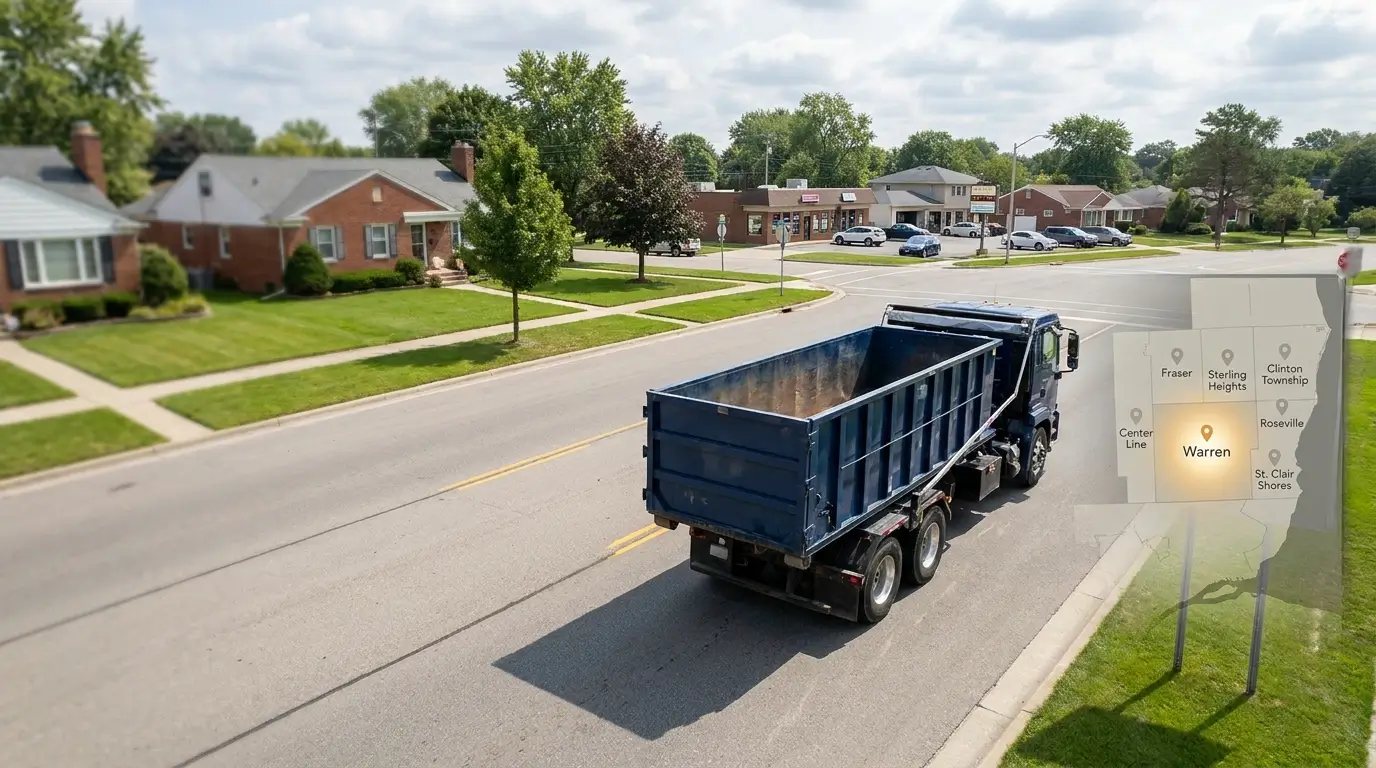
At Warren Dumpster Rental, we help customers understand their dumpster rental options for residential and commercial projects in Warren, Michigan, and nearby communities.
If you are planning a cleanup, renovation, or construction project, contact Warren Dumpster Rental to discuss your debris type, container size, and rental requirements before scheduling delivery.
Frequently Asked Questions About Dumpster Overage Fees
1. What is a dumpster overage fee?
A dumpster overage fee is an additional charge applied when the weight of your debris exceeds the weight allowance included in your rental agreement.
2. How do dumpster companies calculate overweight charges?
Most providers subtract the included weight allowance from the actual debris weight. They then multiply the excess tonnage by their applicable overage rate. Some companies use rounding rules or minimum charges.
3. Does a half-full dumpster still count as overweight?
Yes. A partially filled dumpster can exceed its weight allowance if it contains dense materials such as concrete, dirt, brick, or tile.
4. What materials are the heaviest in a dumpster?
Concrete, brick, stone, dirt, roofing shingles, and ceramic tile are among the heavier materials commonly disposed of in dumpsters.
5. How much does one ton of dumpster overage cost?
There is no universal rate. The cost depends on the rental company, disposal facility, location, and type of debris. Ask your provider for its current overage rate.
6. Can I put concrete in a regular dumpster?
Some providers accept small quantities of concrete, while others require a dedicated heavy-debris container. Always confirm acceptance and weight restrictions before loading concrete.
7. Does a bigger dumpster have a higher weight limit?
Not necessarily. Dumpster size refers to volume, while weight allowances are determined by the rental provider and disposal requirements. Always check the included tonnage.
8. How can I estimate the weight of my dumpster load?
You can estimate weight by identifying the materials, calculating their approximate quantities, and using material weight references. However, the final disposal weight is determined by weighing the loaded container and subtracting its empty weight.
9. Will wet debris increase my dumpster weight?
Yes. Materials such as soil, drywall, cardboard, and other absorbent waste can become significantly heavier when wet.
10. Can a dumpster company refuse to pick up an overweight container?
Yes. If a dumpster exceeds its safe loading capacity or applicable transportation limits, the provider may refuse pickup until the load is reduced.
11. Are dumpster weight limits included in the rental price?
Most rental quotes specify an included weight allowance, but the amount varies. Confirm the allowance and any additional disposal charges before booking.
12. Can I get a refund for unused dumpster weight?
Refund policies vary. Some rental packages include a fixed weight allowance without refunds for unused tonnage, while other pricing arrangements may be based on actual disposal weight.
13. What happens if I exceed my dumpster’s weight allowance?
You may receive an additional overweight charge based on the excess tonnage. If the container is too heavy for safe transportation, you may also need to remove some debris before pickup.
14. Should I rent a smaller dumpster for concrete or dirt?
A smaller container approved for heavy debris may be more appropriate because dense materials can reach weight limits before filling the available space. Ask your provider for the recommended option.
15. How can I avoid unexpected dumpster rental fees?
Confirm the included weight allowance, ask about overage rates, separate heavy materials when appropriate, avoid prohibited waste, and keep the load within the container’s safe loading limits.Know the allowance, know your materials. See pricing factors for the rest of the picture.