A roll-off dumpster is one of the most convenient ways to remove large amounts of household junk, renovation debris, and construction waste. Whether you are cleaning out a garage, remodeling a kitchen, replacing a roof, or preparing a property for renovation, having a container on-site can make debris removal much easier.
However, a roll-off dumpster is not a place for everything.
Most providers accept common household and construction debris, but certain materials are prohibited, restricted, or require special handling. The rules can depend on the dumpster provider, the type of rental, and the disposal facility receiving the waste. An item accepted by one facility may still be prohibited under another provider’s rental agreement.
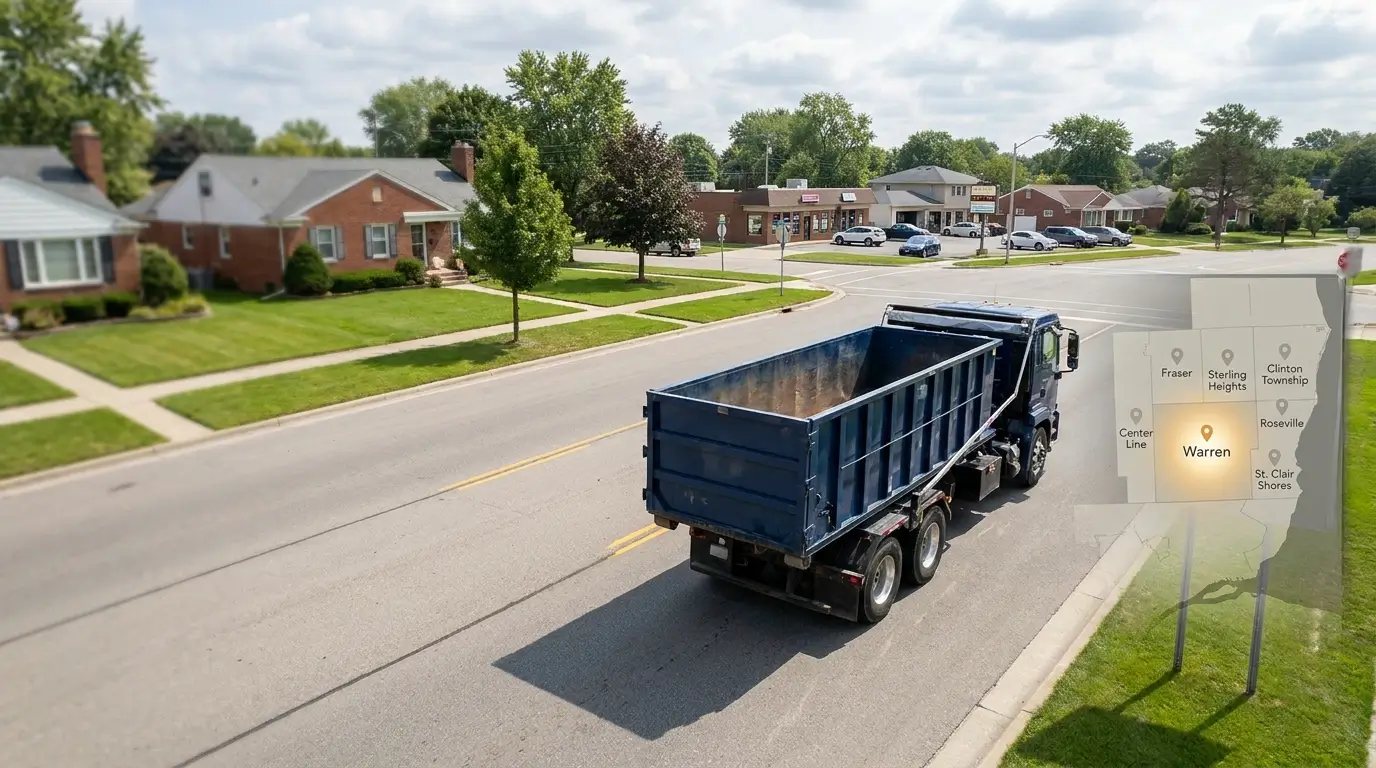
For homeowners and contractors in Warren, Michigan, understanding these rules before loading the container can help prevent rejected loads, additional charges, and project delays.
This guide explains what usually goes into a roll-off dumpster, which materials should stay out, how to handle heavy debris, and what Warren residents may be able to dispose of through the city’s curbside collection and recycling programs.
What Can You Usually Put in a Roll-Off Dumpster?
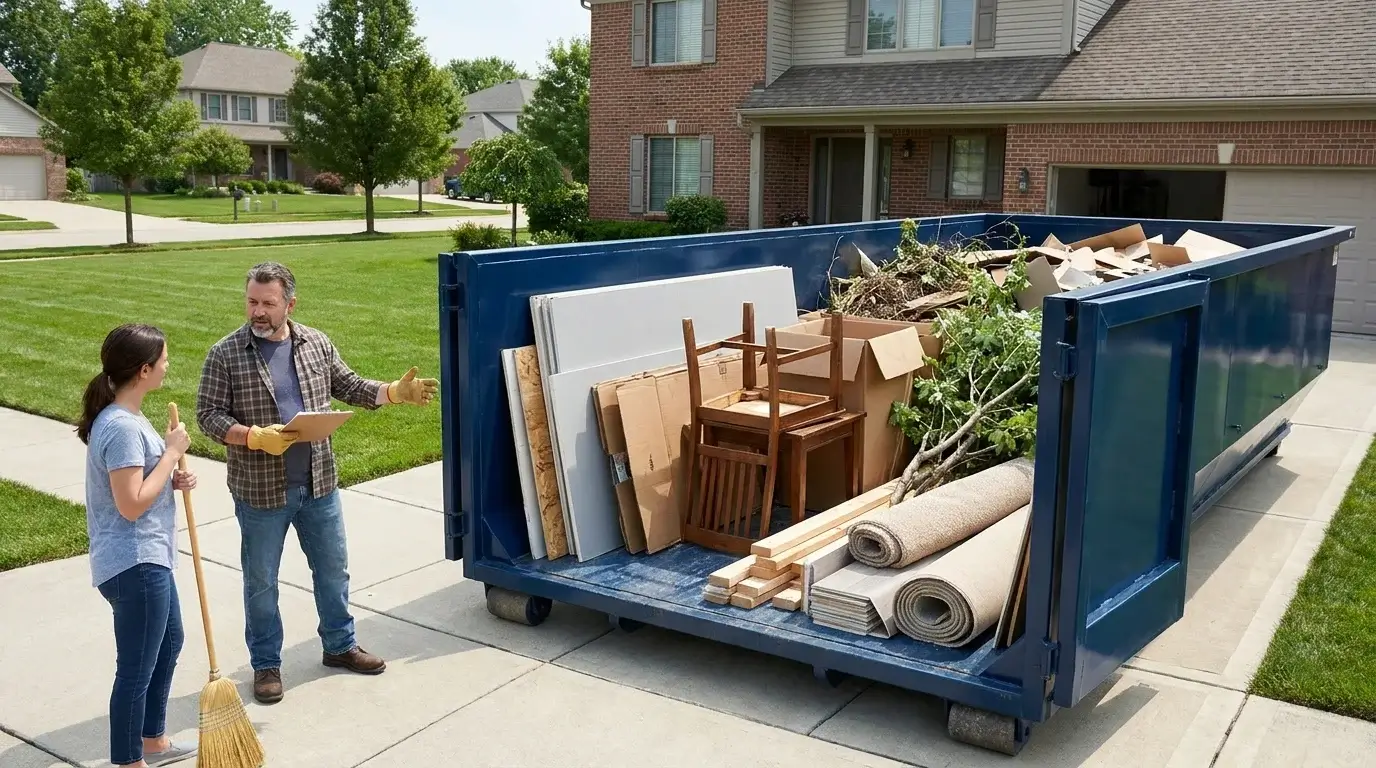
Most standard roll-off rentals accept ordinary household junk and many types of non-hazardous construction and demolition debris.
The exact accepted-material list varies, so always check with the provider before loading anything questionable. However, the following categories are commonly accepted.
1. Household Junk and General Trash
A roll-off dumpster can be useful when you are removing accumulated household belongings or clearing out a property.
Common examples include:
- General household junk
- Broken household items
- Cardboard and packaging
- Old decorations
- Non-hazardous household debris
- Discarded toys and miscellaneous belongings
- Damaged storage containers
- General cleanup waste
These materials are common during garage cleanouts, basement cleanouts, estate cleanouts, and moving projects.
Before throwing everything away, separate items that can be reused, donated, or recycled. Furniture, working appliances, clothing, and household goods may still have value to someone else.
Also remember that ordinary household trash does not automatically mean every household product is acceptable. Chemicals, liquids, batteries, and other restricted materials should be handled separately.
2. Furniture, Mattresses, and Bed Frames
Many roll-off providers accept bulky household items that are difficult to dispose of through regular trash collection.
Examples may include:
- Sofas and couches
- Chairs and recliners
- Tables and desks
- Dressers and cabinets
- Bed frames
- Box springs
- Mattresses
- Shelving units
Furniture is commonly generated during moving, estate cleanouts, rental property turnovers, and home renovations.
Before loading large items, consider breaking down furniture where practical. Removing detachable legs, shelves, or other components can make loading more efficient and help use the available container space.
Mattresses and upholstered furniture can take up considerable room. If you have several bulky items, account for their volume when choosing a dumpster size.
Important: Although many roll-off providers accept mattresses, the City of Warren also has curbside procedures for certain bulky items. Check the city’s current collection guidelines before using dumpster space for something that may qualify for municipal pickup.
3. Remodeling and Construction Debris
Construction and remodeling projects often produce a mixture of materials that standard roll-off dumpsters are designed to handle.
Common examples include:
- Drywall
- Framing lumber
- Wood trim
- Cabinets
- Non-hazardous construction scrap
- Interior doors
- Non-refrigerant fixtures
- Flooring materials
- General demolition debris
For example, a kitchen renovation may produce old cabinets, drywall, wood framing, countertop pieces, and flooring. A bathroom renovation may generate tile, drywall, fixtures, and other demolition waste.
Before loading construction debris, separate materials that may require special handling. Older buildings can contain materials such as asbestos or lead-containing components. Do not assume that these materials can be placed in a standard roll-off container.
If you suspect regulated materials are present, stop and ask a qualified professional about proper identification and disposal.
4. Flooring, Carpet, and Padding
Flooring removal can create a surprising amount of debris.
Many providers accept common non-hazardous flooring materials, such as:
- Carpet
- Carpet padding
- Vinyl flooring
- Laminate flooring
- Wood flooring
- Non-hazardous flooring scraps
- Tile, subject to weight restrictions
Carpet and padding are bulky rather than especially heavy. Rolling and tying carpet into manageable sections can make loading easier.
Tile, on the other hand, can become heavy very quickly. A large amount of ceramic or porcelain tile may use a significant portion of the dumpster’s weight allowance even when the container is not full.
If you are removing flooring from several rooms, estimate both the volume and weight before selecting a container.
5. Roofing Shingles
Roofing shingles are accepted by some roll-off providers, but they often have specific size, weight, and container requirements.
Asphalt shingles are dense. A roofing project can reach the weight allowance before the dumpster looks full.
Before booking a dumpster for a roof replacement, ask:
- Are asphalt shingles accepted?
- Is there a separate roofing-material rate?
- Which dumpster sizes are suitable?
- What weight allowance is included?
- Are mixed roofing debris and household junk allowed together?
- Does the provider require shingles to be loaded separately?
Do not assume that a large container is automatically suitable for a heavy roofing load.
If your project involves a roof tear-off, review the provider’s roofing-specific instructions before work begins.
6. Clean Wood and General Construction Scrap
Many roll-off rentals accept ordinary clean wood and construction scraps, including:
- Untreated lumber
- Wood framing
- Trim pieces
- Non-hazardous plywood
- Broken wooden furniture
- General construction offcuts
However, treated wood, painted materials, and other specialty waste may have additional restrictions depending on the provider and disposal facility.
If you are removing an old deck, fence, shed, or other outdoor structure, ask whether the provider accepts the specific materials involved.
What Should You Keep Out of a Roll-Off Dumpster?
Some materials are commonly prohibited in standard roll-off rentals because they can create environmental, safety, transportation, or disposal problems.
A provider may refuse a load containing restricted materials. In some cases, the customer may have to remove the item, arrange separate disposal, or pay additional handling charges.
The following categories deserve particular attention.
1. Hazardous Waste and Chemicals
Hazardous waste should not be placed in a standard roll-off dumpster unless the provider has explicitly approved a specialized arrangement.
Examples include:
- Industrial chemicals
- Solvents
- Pesticides
- Certain cleaning chemicals
- Chemical products with hazardous labels
- Flammable liquids
- Unknown chemical containers
These materials may require special collection or treatment.
Never pour chemicals into the dumpster, onto the ground, or into a storm drain. Keep containers closed and follow the product label and local disposal instructions.
If you are cleaning out a garage, workshop, or storage building, check containers before loading them. Old bottles and cans may contain products that should not be mixed with ordinary trash.
2. Paint, Stains, and Other Liquids
Paint and liquid waste are common sources of confusion.
Many standard roll-off providers prohibit liquid paint, stains, solvents, and similar materials. Liquids can leak during transportation and create problems at the disposal facility.
Do not place open paint cans, leaking containers, or liquid chemicals in a dumpster.
The City of Warren has specific guidance for latex paint: it should be dried out or solidified before being placed out with regular garbage under the city’s instructions. That municipal rule should not be treated as permission to put liquid paint into a private roll-off dumpster.
Oil-based paint, solvents, and other chemical coatings may require different handling.
If you have leftover paint from a remodeling project, contact the provider or check the city’s disposal information before deciding where it belongs.
3. Batteries
Batteries should generally be kept out of standard roll-off dumpsters.
This includes:
- Car batteries
- Lead-acid batteries
- Rechargeable batteries
- Lithium-ion batteries
- Damaged or swollen battery packs
Batteries can create fire, chemical, and environmental hazards when crushed, punctured, or mixed with ordinary waste.
Lithium-ion batteries deserve particular care because damage can cause overheating or fire. Do not throw them into a dumpster with household junk or construction debris.
Use an appropriate battery collection or recycling option instead.
4. Tires
Tires require special attention because acceptance policies can differ between providers and disposal facilities.
Some facilities may accept certain tire loads under their own operating rules, while an individual dumpster provider may prohibit tires in its standard rentals.
That distinction matters. A landfill’s ability to accept a material does not automatically mean your hauler will allow it in the container.
Before loading tires, ask the provider:
- Are passenger vehicle tires accepted?
- Are truck or commercial tires treated differently?
- Is there a per-tire fee?
- Must tires be separated from other debris?
- Is a special disposal arrangement required?
Do not assume that a general household dumpster includes tire disposal.
5. Refrigerators, Freezers, and Air Conditioning Units
Appliances containing refrigerants can require special handling.
Examples include:
- Refrigerators
- Freezers
- Window air conditioners
- Dehumidifiers
- Certain cooling equipment
Refrigerants must be handled properly. Do not cut refrigerant lines, puncture cooling components, or attempt to release refrigerant yourself.
Some providers offer appliance disposal options, while others prohibit these items in standard roll-off containers.
The City of Warren also has specific curbside procedures for appliances. Its guidelines state that refrigerators and freezers must be emptied and have their doors removed before pickup. Air conditioners and dehumidifiers require refrigerant removal by a licensed refrigerant recovery or heating and cooling company, with a sticker showing proof attached to the appliance.
These are city collection instructions, not general permission to put appliances into a private dumpster.
6. Asbestos and Other Regulated Materials
Asbestos-containing materials should never be treated as ordinary construction debris.
Asbestos may be present in certain older building materials, including some insulation, flooring products, pipe coverings, and other components.
If you suspect asbestos, do not break, cut, or disturb the material to make it fit into a dumpster.
A qualified professional can help determine whether testing, controlled removal, or specialized disposal is necessary.
Other regulated construction materials may also require special handling. Ask the provider before beginning demolition if the property is older or if you have concerns about the materials being removed.
7. Propane Tanks and Pressurized Containers
Propane tanks and other pressurized containers should generally stay out of standard roll-off dumpsters.
Even an apparently empty tank may contain residual gas. Puncturing, crushing, or exposing a pressurized container to heat can create serious safety risks.
Contact an appropriate propane supplier or disposal service for instructions.
Do not place cylinders, fuel tanks, or similar containers into a dumpster unless the provider has specifically approved the item and explained the required handling procedure.
8. Medical and Biohazardous Waste
Medical waste is not ordinary household or construction debris.
Examples include:
- Used needles and sharps
- Blood-contaminated materials
- Certain medical supplies
- Biohazardous waste
- Materials requiring regulated medical disposal
These items may need approved containers and specialized collection services.
If you are cleaning out a property where medical waste may be present, do not mix it with general debris. Contact an appropriate medical-waste disposal service.
Heavy Materials Need a Separate Plan
Not every accepted material is suitable for every dumpster size.
Concrete, brick, dirt, stone, tile, and similar materials can become extremely heavy. A container may reach its weight allowance long before it is physically full.
Some providers offer specialized arrangements for heavy debris, while others restrict these materials in standard roll-off rentals.
Concrete
Concrete is one of the heaviest materials generated during demolition.
It may come from:
- Patio removal
- Sidewalk demolition
- Driveway repairs
- Garage floor removal
- Foundation work
- Concrete steps
- Small slabs
Solid concrete can weigh roughly 2 tons per cubic yard, depending on its composition and moisture content.
That means even a relatively small amount can consume a substantial portion of a dumpster’s weight allowance.
If you are removing a patio or slab, do not automatically order a standard 20-, 30-, or 40-yard dumpster. Ask whether the provider offers a concrete-only container or another approved disposal arrangement.
Brick and Masonry
Brick, block, and masonry debris are also dense.
Examples include:
- Brick walls
- Chimney demolition
- Concrete blocks
- Pavers
- Stonework
- Masonry steps
These materials may be accepted under specific conditions, but they should not be mixed into a general household load without approval.
A small amount of brick may be manageable under one provider’s rules, while another provider may require a separate container.
Dirt, Soil, and Sand
Dirt and soil can be particularly heavy when wet.
A load that appears manageable when dry may weigh much more after rain or when the material contains moisture.
Before ordering a dumpster for landscaping or excavation debris, ask whether clean soil is accepted and whether the provider has a dedicated dirt container or weight restriction.
Tile and Roofing Debris
Tile, shingles, and other dense materials can also reach the weight limit quickly.
If your project includes multiple heavy materials, tell the provider exactly what you plan to dispose of. A general description such as “remodeling debris” may not provide enough information to select the right container.
For additional guidance, read the Dumpster Overage Fees: How Weight Limits Affect Your Final Bill article.
Why the Disposal Facility’s Rules Matter
A dumpster provider does not make disposal decisions in isolation. The material eventually goes to a transfer station, landfill, recycling facility, or another approved destination.
The receiving facility has its own acceptance requirements.
This is why two providers may have different rules for the same item. They may use different disposal facilities, have different contracts, or offer different types of waste-handling services.
Pine Tree Acres Landfill in Lenox Township
Pine Tree Acres Landfill is located at 36600 29 Mile Road in Lenox Township, Michigan. It is a regional disposal facility serving communities and businesses in Southeast Michigan.
Its published facility information lists municipal solid waste and construction and demolition debris among its accepted material categories. Its listing also identifies certain other material categories, including tires, while stating that hazardous waste is not accepted.
However, this does not mean every roll-off provider serving Warren sends every load to Pine Tree Acres or accepts every material the facility may handle.
The provider’s rental agreement and disposal arrangements still determine what you can put in your specific container.
For that reason, use the landfill’s published information as background—not as a substitute for checking your hauler’s prohibited-material list.
What Warren Curbside Collection Takes Instead
Some materials may be handled through the City of Warren’s Sanitation Division rather than taking up space in a private roll-off dumpster.
The city publishes separate guidelines for regular refuse, bulky items, appliances, compost, and recycling.
Knowing these options can help residents avoid using a dumpster for items that may qualify for municipal collection.
Regular Household Trash
Warren residents should follow the city’s garbage-cart requirements.
The city’s guidelines state that regular garbage must be placed in the appropriate city-issued cart or in accordance with its bagging instructions. Trash should not protrude above the top of the cart, and the lid must close.
The city also provides rules for when carts and bags may be placed at the curb.
A roll-off dumpster may be more useful when a project generates more debris than regular household collection can reasonably handle.
Furniture and Mattresses
The city allows certain bulky household items to be placed beside the regular rubbish containers for collection.
Examples listed in the city’s guidelines include:
- Furniture
- Mattresses
- Appliances
- Carpet
There are preparation requirements. For example, carpets and padding must be cut, rolled, and tied securely in sections no longer than four feet.
Mattresses with bed bugs must be wrapped and contained in plastic.
Because collection rules can change or depend on the item, check the city’s current instructions before placing bulky items at the curb.
Appliances
Warren’s curbside rules include specific preparation requirements for appliances.
Refrigerators and freezers must be empty, and their doors must be removed before pickup. The city says the refrigerant does not have to be removed from those appliances for its curbside collection.
Air conditioners and dehumidifiers are treated differently. Their refrigerant must be removed by a licensed refrigerant recovery or heating and cooling company, and a sticker showing proof must be attached before collection.
These requirements are specific to the city’s program. A private dumpster provider may have different rules.
Building Materials and Heavy Debris
The City of Warren’s curbside guidelines identify several materials that are not collected through regular curbside refuse service.
These include:
- Building materials
- Dirt
- Sod
- Mulch
- Bricks
- Rocks
- Tires
- Roofing shingles
- Concrete
- Hazardous waste
This is an important distinction for renovation and demolition projects.
A homeowner removing a bathroom, replacing a roof, or breaking up a patio should not assume that the resulting debris can be left beside the regular trash cart.
A roll-off rental or another approved disposal arrangement may be necessary.
Yard Waste and Compost
Warren has separate compost collection rules.
The city’s published guidelines state that compost season runs from April 1 through December 1, with no curbside compost pickup from December 2 through March 31. The city also provides instructions for acceptable containers, bundled branches, and other yard materials.
Small branches and shrubs must meet the city’s size and preparation requirements. Tree trunks and stumps are not collected curbside under the regular compost rules.
If your project includes landscaping, brush, leaves, or yard debris, check the current compost guidelines before placing those materials in a roll-off dumpster.
Warren Recycling Center
The City of Warren also operates a Recycling Center at 25801 Flanders.
The city’s published information lists accepted items such as furniture, household refuse, cooking oil, paper, cardboard, batteries, motor oil, antifreeze, electronics, scrap metal, appliances, and compost material. It also indicates that limited amounts of building and construction materials may be accepted, subject to the judgment of facility personnel.
There are important eligibility restrictions. The city states that the facility is for bona fide Warren residents with proof of residency and that contractors are not eligible to use the sanitation facility to dispose of materials.
The Recycling Center is not a substitute for a commercial construction-waste disposal arrangement.
Before making a trip, check the city’s current operating hours, accepted materials, eligibility rules, and any applicable charges.
A Simple Check Before You Load
Before putting an item into a roll-off dumpster, use this quick process.
Step 1: Check Whether It Is Hazardous or Restricted
Ask whether the item contains chemicals, liquid waste, fuel, refrigerant, batteries, or regulated material.
If it does, keep it out until the provider confirms an approved disposal method.
Step 2: Check the Weight
If the material is concrete, brick, soil, tile, shingles, or stone, ask about weight limits and container restrictions.
Do not assume that an item is acceptable simply because it fits inside the dumpster.
Step 3: Consider Other Disposal Options
Some bulky household items may qualify for Warren curbside collection. Other materials may be accepted at the city’s Recycling Center if you meet the eligibility requirements.
Check the current city guidelines before using dumpster space.
Step 4: Ask the Provider if You Are Unsure
If an item is not clearly listed as accepted, contact the provider before loading it.
Describe the material accurately. If possible, explain whether it is mixed with other debris, how much you have, and whether it is wet, contaminated, or unusually heavy.
A quick confirmation before loading is easier than dealing with a rejected load later.
How to Load a Roll-Off Dumpster Safely
Knowing what can go into a dumpster is only part of the process. Loading it correctly also matters.
Keep the Load Below the Top Rim
Do not pile debris above the container’s top edge.
Overfilled dumpsters may not be safe to transport and can be refused for pickup until the excess material is removed.
Distribute Heavy Materials Carefully
Do not concentrate all heavy debris in one area.
Follow the provider’s loading instructions and avoid exceeding the weight allowance. If you are disposing of dense materials, ask whether a dedicated container is required.
Keep Prohibited Items Separate
Do not mix restricted materials into a general debris load and hope they will go unnoticed.
Keep batteries, chemicals, liquids, tires, refrigerant appliances, and other questionable items separate until you have confirmed an approved disposal option.
Avoid Blocking Access
The dumpster should remain accessible for pickup.
Keep vehicles, equipment, construction materials, and other obstacles away from the container. If the provider needs to reposition or retrieve it, clear access can help prevent delays.
Do Not Burn or Alter the Contents
Never burn debris inside a dumpster or attempt to destroy prohibited materials by setting them on fire.
Do not puncture pressurized containers, refrigerant lines, or chemical containers.
Use the disposal method appropriate for each material.
Common Mistakes to Avoid
Assuming Every Provider Accepts the Same Materials
A material accepted by one company may be prohibited by another.
Always use the accepted-material list for the provider handling your rental.
Treating the Landfill’s List as the Dumpster’s List
A disposal facility may accept certain materials under specific conditions. That does not automatically make those materials acceptable in every roll-off container.
Your hauler’s agreement is the practical rule to follow.
Mixing Heavy Debris With Household Junk
Concrete, brick, dirt, and shingles can use up the weight allowance quickly.
Ask about separate containers or special arrangements before mixing heavy materials into a general load.
Forgetting About Refrigerant Appliances
Refrigerators, freezers, air conditioners, and dehumidifiers may require special handling.
Do not place them in a standard dumpster without explicit approval.
Assuming Curbside Collection Takes Construction Debris
Warren’s regular curbside guidelines exclude several building and demolition materials, including shingles, concrete, dirt, bricks, and other construction debris.
Check the city’s rules rather than leaving these materials beside the trash cart.
Waiting Until the Dumpster Is Full to Ask
If you are unsure about an item, ask before loading it.
Once a restricted material is buried under other debris, removing it can become more difficult and time-consuming.
Planning a Dumpster Rental in Warren, Michigan
Roll-off dumpsters can be useful for many residential and commercial projects in Warren, including:
- Garage and basement cleanouts
- Kitchen and bathroom renovations
- Flooring removal
- Roofing projects
- Deck demolition
- Estate cleanouts
- Property turnovers
- Construction and remodeling work
The best container depends on the volume and type of debris, not just the size of the project.
A small bathroom renovation may generate a manageable amount of debris, while a full kitchen demolition can involve cabinets, drywall, flooring, fixtures, and other materials.
A roofing project may require a different container arrangement because shingles are heavy. A concrete patio removal may need a specialized heavy-material option rather than a standard mixed-debris dumpster.
When arranging a rental, explain the project and the materials you expect to remove. Ask the provider to confirm the appropriate container, accepted materials, weight allowance, and any additional disposal requirements.
Warren Dumpster Rental helps connect customers with independent dumpster rental providers serving Warren, Michigan and nearby communities where coverage is available. The provider you are matched with handles availability, rental arrangements, pricing, billing, delivery, and pickup.
Frequently Asked Questions
What can you put in a roll-off dumpster?
Most standard roll-off dumpsters accept common household junk, furniture, mattresses, drywall, wood, flooring, cabinets, and general non-hazardous construction debris. The exact accepted list depends on the provider and disposal facility.
Can I put furniture in a roll-off dumpster?
Many providers accept furniture such as sofas, chairs, tables, dressers, and bed frames. Check the provider’s rules before loading large or unusual items.
Can I put a mattress in a dumpster?
Some providers accept mattresses, but policies vary. Warren residents may also have a curbside collection option for mattresses if they follow the city’s preparation instructions.
Can I put drywall in a roll-off dumpster?
Drywall is commonly accepted as construction debris, provided it meets the provider’s material and weight requirements. If the drywall may contain regulated materials, ask a qualified professional before disturbing it.
Can I put roofing shingles in a dumpster?
Some providers accept asphalt shingles, but roofing loads can be heavy and may require a specific container or weight allowance. Confirm the provider’s roofing rules before ordering.
Can I put concrete in a roll-off dumpster?
Some providers accept concrete under special weight restrictions or in dedicated containers. Concrete is very heavy, so never assume a standard mixed-debris dumpster can take a full concrete load.
Can I put dirt or soil in a dumpster?
Dirt and soil are restricted by many providers or accepted only under specific conditions. Ask about a dedicated soil container, weight limits, and whether the material must be clean and uncontaminated.
Can I put paint cans in a dumpster?
Do not put liquid paint, stains, or chemical coatings into a standard roll-off dumpster unless the provider explicitly approves them. Warren has separate instructions for dried or solidified latex paint under its municipal collection rules.
Can I put tires in a roll-off dumpster?
Tire policies vary. Some disposal facilities accept certain tire loads, but an individual hauler may prohibit tires in its standard dumpster. Confirm the provider’s policy and any additional fees before loading them.
Can I put a refrigerator or air conditioner in a dumpster?
Do not assume these appliances are accepted. Refrigerant-containing appliances may require special handling and recovery procedures. Ask the provider about its appliance disposal policy.
Can I put batteries in a dumpster?
Standard roll-off dumpsters generally prohibit batteries because of fire and environmental risks. Use an appropriate battery collection or recycling option.
Can I put yard waste in a roll-off dumpster?
Some providers accept yard waste, while others require it to be separated or prohibit it. Warren also has a municipal compost program with specific seasonal and preparation rules. Check both options before loading leaves, branches, or other yard debris.
What happens if I put a prohibited item in a dumpster?
The provider or disposal facility may reject the load, require the item to be removed, or apply additional handling charges. The exact consequences depend on the material and rental agreement.
Where can Warren residents take items that do not belong in a dumpster?
Depending on the material, residents may be able to use city curbside collection, the Warren Recycling Center, or an appropriate specialized disposal service. Check current city eligibility and accepted-material requirements before taking items anywhere.
Final Thoughts
A roll-off dumpster makes large cleanouts and renovation projects easier, but it is important to know what belongs inside before loading begins.
Household junk, furniture, drywall, wood, flooring, and many types of non-hazardous construction debris are commonly accepted. Hazardous chemicals, liquids, batteries, refrigerant appliances, medical waste, and other restricted materials need separate handling. Heavy materials such as concrete, brick, dirt, and shingles require special attention because they can reach weight limits quickly.
For Warren projects, also consider whether certain bulky household items qualify for city curbside collection or whether eligible residents can use the municipal Recycling Center.
The safest rule is simple: check the item, confirm the weight, and ask the provider if you are unsure. A two-minute call before loading can help prevent rejected loads, unexpected charges, and unnecessary delays.