Choosing between a 20-yard and 30-yard dumpster can make a significant difference in how smoothly your remodeling or cleanout project goes. Both sizes are designed for larger residential and commercial jobs, but they serve different needs. A 20-yard dumpster is often sufficient for substantial home renovations, garage cleanouts, and single-floor remodeling projects. A 30-yard dumpster provides additional space for whole-house cleanouts, multi-room renovations, and larger construction projects.
The challenge is determining how much waste your project will actually produce. Renting a container that is too small can mean arranging another haul or paying for a replacement container. Choosing one that is unnecessarily large may increase your rental cost and create placement challenges.
For homeowners, landlords, contractors, and property managers planning a project in Warren, Michigan, the best choice depends on three main factors: debris volume, material weight, and available delivery space.
This guide compares 20-yard and 30-yard dumpsters, explains which projects fit each size, and covers the questions to ask before arranging a dumpster rental in Warren, MI.
20-Yard vs. 30-Yard Dumpster: What’s the Difference?
The most obvious difference is capacity. A 30-yard dumpster holds 10 more cubic yards of debris than a 20-yard container. That represents 50% more volume, which can be valuable when a project involves several rooms, bulky furniture, or a large quantity of construction debris.
However, the additional capacity does not automatically make the 30-yard option better. The right size depends on the amount and type of waste you expect to remove.
A 20-yard dumpster is generally a practical choice for medium-to-large residential projects. A 30-yard dumpster is better suited to projects that generate a larger volume of material or involve several areas of a property.
20-Yard Dumpster at a Glance
A 20-yard dumpster provides approximately 20 cubic yards of container space. It is commonly used for:
- Kitchen and bathroom remodeling
- Single-floor renovation projects
- Large garage cleanouts
- Basement and attic cleanouts
- Flooring and carpet removal
- Small-to-medium roofing projects
- Deck removal and replacement
- Moving-related household cleanouts
This size offers a useful balance between capacity and placement space. It can accommodate a substantial amount of household junk or renovation debris without requiring the footprint of a larger container.
For example, a homeowner replacing kitchen cabinets, countertops, flooring, and some drywall may find a 20-yard dumpster suitable. The final choice will depend on the amount of material being removed and the provider’s accepted-material and weight requirements.
30-Yard Dumpster at a Glance
A 30-yard dumpster provides approximately 30 cubic yards of capacity. It is often a better fit for larger projects, including:
- Whole-house cleanouts
- Estate and foreclosure cleanouts
- Multi-room renovations
- Large home additions
- New construction projects
- Major demolition work
- Large roofing projects
- Commercial property cleanouts
The additional space can help when multiple rooms or work areas generate debris at the same time. It can also reduce the likelihood of filling a container before the project is complete.
For example, a landlord preparing a large rental property for renovation may need to remove old furniture, carpeting, cabinets, drywall, and other materials. A 30-yard dumpster may provide more practical capacity than a 20-yard option.
Comparing 20-Yard and 30-Yard Dumpster Sizes
The following comparison provides a general starting point. Actual container dimensions, weight allowances, and accepted materials vary by provider.
| Feature | 20-Yard Dumpster | 30-Yard Dumpster |
|---|---|---|
| Total volume | 20 cubic yards | 30 cubic yards |
| Relative capacity | Standard large container | 50% more volume |
| Common projects | Single-floor remodels, garage cleanouts | Whole-house cleanouts, multi-room renovations |
| Typical debris | Furniture, flooring, drywall, household junk | Larger quantities of renovation and construction debris |
| Space requirements | Generally easier to accommodate | Usually requires more clearance |
| Best suited for | Medium-to-large projects | Large projects with substantial debris |
One Warren-area provider, Dumpsters.com, lists typical dimensions of approximately 22 feet long by 7.5 feet wide by 4.5 feet high for its 20-yard container. Its listed 30-yard container is approximately 22 feet long by 7.5 feet wide by 6 feet high. These are provider-specific examples, not universal dimensions.
The 30-yard container in this example is taller, while the length and width are similar. Other providers may use different dimensions, so confirm the actual container measurements before scheduling delivery.
When a 20-Yard Dumpster Is the Better Choice
A 20-yard dumpster is often the more practical option when your project has a defined scope and produces a moderate-to-large amount of debris.
1. Single-Floor Home Remodeling
A kitchen, bathroom, or living-room renovation can generate considerable waste. Old cabinets, countertops, flooring, drywall, trim, and fixtures all take up space.
For a single-floor renovation, a 20-yard container may provide enough room for the removed materials, particularly when the project does not involve extensive structural demolition.
Before choosing this size, estimate how many rooms are involved and whether large fixtures or bulky materials will be discarded.
2. Garage and Basement Cleanouts
Garages and basements often contain a mixture of furniture, storage boxes, shelving, broken equipment, old carpeting, and general household junk.
A 20-yard dumpster can be a useful choice for a substantial cleanout involving one or two areas of a home.
However, bulky items can consume space quickly. Large furniture, mattresses, cabinets, and appliances may occupy more volume than expected. Check whether the provider accepts each item before loading it.
3. Flooring and Carpet Removal
Removing flooring from a limited area can generate a large amount of debris. Carpet, padding, laminate, hardwood, tile, and underlayment all contribute to the final load.
A 20-yard container may work for a single-floor flooring project, but tile, concrete, and other dense materials require special attention to weight limits.
4. Smaller Roofing Projects
A 20-yard dumpster may be appropriate for some small-to-medium roofing jobs. The important consideration is not only the roof’s square footage but also the number of existing shingle layers, the type of roofing material, and the container’s permitted weight.
Asphalt shingles can become heavy quickly. Ask the provider for the included weight allowance and any material-specific restrictions before booking.
When a 30-Yard Dumpster Makes More Sense
A 30-yard dumpster becomes more attractive when the project covers a larger portion of the property or produces debris from several work areas.
1. Whole-House Cleanouts
Preparing an entire home for sale, moving, renovation, or property turnover can generate a substantial volume of waste.
A whole-house cleanout may involve:
- Sofas and chairs
- Mattresses and bed frames
- Tables and cabinets
- Clothing and household goods
- Old carpeting
- Shelving and storage units
- General renovation debris
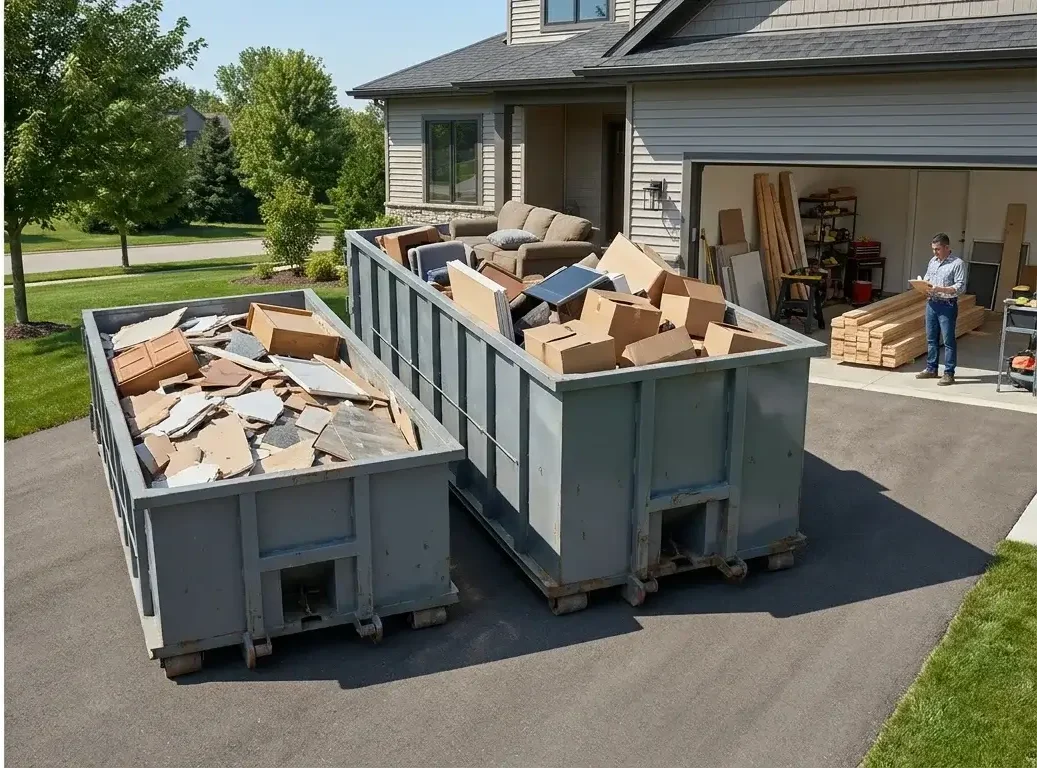
A 30-yard dumpster can provide additional room for bulky items and mixed household debris. It may be especially useful for estate cleanouts or properties that have accumulated unwanted belongings over many years.
2. Multi-Room Renovations
Renovating multiple rooms at the same time can produce more waste than expected. Kitchen cabinets, bathroom fixtures, flooring, drywall, doors, trim, and other materials may all need to be removed.
A 30-yard container can help accommodate debris from several rooms without requiring the same level of loading coordination as a smaller container.
If the renovation includes structural demolition, concrete, brick, or other heavy materials, discuss weight restrictions separately. Additional volume does not mean unlimited weight capacity.
3. Large Roofing Projects
Roofing contractors may prefer a larger container when removing shingles from a substantial roof area or working on multiple sections of a property.
However, roofing waste is a good example of why container size should never be selected by volume alone. A dumpster can reach its weight allowance while there is still unused space near the top.
Ask the provider whether the quoted rental includes a specific shingle weight allowance and whether additional disposal charges apply.
4. Construction and Demolition Projects
A 30-yard dumpster may be appropriate for larger renovation, construction, and demolition projects involving wood, drywall, siding, flooring, and other accepted building materials.
Contractors should estimate the debris generated by each phase of the job. If demolition and construction are happening simultaneously, a larger container may reduce interruptions caused by limited waste capacity.
Why Dumpster Weight Matters as Much as Volume
One of the most common mistakes when choosing a dumpster is focusing entirely on how much material can fit inside it.
A 30-yard dumpster has more volume than a 20-yard container, but that does not mean the truck can transport an unlimited amount of debris. Every rental has weight restrictions, and the provider must account for the legal and operational limits involved in transporting the loaded container.
Heavy Materials Can Fill the Weight Allowance Quickly
Some materials are much denser than ordinary household junk.
Examples include:
- Concrete
- Brick
- Dirt and soil
- Roofing shingles
- Tile
- Plaster
- Stone and masonry debris
A relatively small quantity of concrete or dirt can weigh more than a much larger volume of furniture, cardboard, or general household waste.
This means a large dumpster may be unnecessary or unsuitable for a project involving dense materials.
Ask About the Included Weight Allowance
Before renting either size, ask the provider:
- How much weight is included in the quoted rental?
- What is the charge for exceeding the allowance?
- Are concrete, dirt, shingles, or tile subject to special restrictions?
- Are there separate containers for heavy materials?
- Does the provider require certain materials to be loaded separately?
The answers can help determine whether a 20-yard or 30-yard dumpster is appropriate.
Avoid Filling a Large Container With Heavy Debris
For projects involving concrete, dirt, brick, or similar materials, a smaller container designed for heavy debris may be more appropriate.
Never assume that a dumpster can be filled to the top with dense materials simply because there is still physical space available. Follow the provider’s loading instructions and weight restrictions.
How Much Project Debris Can Each Size Hold?
Pickup-truck-load estimates can help homeowners visualize dumpster capacity, but they are not exact measurements. Pickup trucks differ in bed size, and the amount of waste each can carry depends on its dimensions and loading method.
Dumpsters.com lists its 20-yard container as holding approximately six pickup-truck loads and its 30-yard container as holding approximately nine pickup-truck loads. These estimates are specific to that provider’s comparison.
The difference is useful as a planning reference, but your actual project may require more or less space.
Use Your Project Scope to Estimate Volume
Instead of relying only on pickup-load estimates, list the materials you plan to remove.
For a remodeling project, consider:
- Number of rooms
- Square footage of flooring being removed
- Amount of drywall and cabinetry
- Number of large fixtures
- Whether walls or ceilings are being demolished
- Whether materials will be broken down before loading
For a cleanout, consider:
- Number of rooms
- Amount of furniture
- Number of large appliances
- Volume of stored belongings
- Whether bulky items can be disassembled
- Whether usable items will be donated or removed separately
A provider can use this information to help recommend an appropriate container.
Will a 30-Yard Dumpster Fit in Your Driveway?
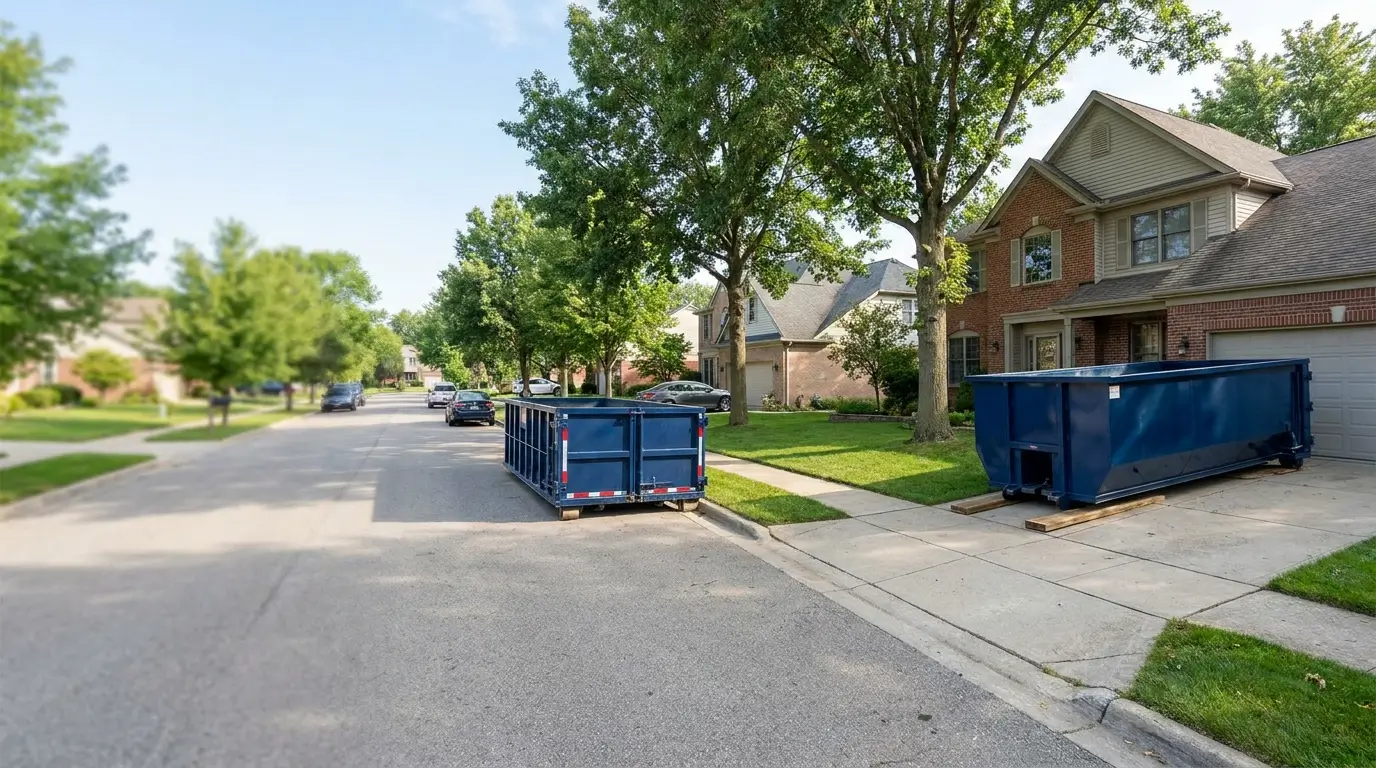
A 30-yard dumpster may fit on many residential properties, but you should not assume that every driveway can accommodate one.
The available space must account for more than the container’s footprint. The delivery truck also needs room to approach, position, and unload the container safely.
Measure the Available Space
Before scheduling delivery, measure:
- Usable driveway length
- Available driveway width
- Clearance from garage doors and parked vehicles
- Distance from fences, walls, and landscaping
- Space needed for the delivery truck to maneuver
The container’s dimensions are only one part of the placement calculation.
Check Overhead Clearance
Low branches, electrical wires, roof overhangs, garage structures, and other obstacles can interfere with delivery.
Dumpsters.com states that its delivery drivers need approximately 60 feet of space and 23 to 25 feet of vertical clearance for successful drop-off. These are that provider’s stated delivery requirements, not guaranteed requirements for every dumpster company. Confirm the actual clearance needed for your selected container and delivery truck.
Consider the 20-Yard Option if Space Is Limited
If your driveway is relatively short or has overhead obstructions, a 20-yard container may be easier to accommodate. However, do not select it solely because it is smaller. Confirm the measurements and delivery requirements with the provider first.
If neither container can be placed safely on private property, ask whether another approved placement option is available. A container placed in a public street or right-of-way may require local approval or a permit. Confirm the applicable requirements with the City of Warren before arranging street placement.
Comparing the Cost of a 20-Yard and 30-Yard Dumpster in Warren, MI
The price difference between a 20-yard and 30-yard dumpster depends on the provider, rental period, weight allowance, material type, delivery location, and disposal requirements.
Dumpsters.com lists general roll-off dumpster prices in Warren, Michigan, ranging from approximately $410 to $825, with an average of $615. This is a broad local planning reference across available sizes, not a confirmed quote for a specific 20-yard or 30-yard rental.
Actual quotes may differ considerably. Do not assume that every provider charges the same amount or includes the same services.
What Can Make the 30-Yard Option More Expensive?
A 30-yard container usually provides more capacity, so its rental price may be higher than a comparable 20-yard option.
However, the price difference should be considered alongside the cost of a second haul.
For example, imagine a project that produces slightly more waste than a 20-yard container can accommodate. If you choose the smaller option and need another container or an additional pickup, the total cost could exceed the price of choosing a suitable larger container from the beginning.
This does not mean that a 30-yard dumpster is always the more economical choice. It means you should compare the complete rental arrangements rather than looking only at the initial quote.
Compare the Details of Each Quote
Ask each provider to explain:
- Delivery and pickup charges
- Included rental period
- Included weight allowance
- Additional weight charges
- Extra rental-day fees
- Material-specific disposal charges
- Overfilled-container fees
- Exchange or additional-haul costs
A written quote makes it easier to compare the actual value of each option.
For a more detailed explanation of pricing factors, read our related guide: What Affects Dumpster Rental Cost in Warren, MI?
You may also find our article about Dumpster Overage Fees: How Weight Limits Affect Your Final Bill useful before choosing a container.
Decision Shortcut: Should You Rent a 20-Yard or 30-Yard Dumpster?
If you are still unsure, use the following guidelines as a starting point.
Choose a 20-Yard Dumpster When:
- You are remodeling one floor or a limited number of rooms.
- You are cleaning out a large garage or basement.
- You are removing flooring from a defined area.
- You have a moderate amount of household junk.
- You have measured the available space and want a smaller container.
- Your estimated debris volume fits within the provider’s capacity and weight limits.
Choose a 30-Yard Dumpster When:
- You are cleaning out most or all of a house.
- Several rooms are being renovated.
- You are handling a large estate or property cleanout.
- You have substantial construction or demolition debris.
- You expect bulky materials to occupy considerable space.
- A 20-yard container would likely fill before the project is complete.
What If Your Project Is Between the Two Sizes?
Some projects fall directly between the typical uses of a 20-yard and 30-yard dumpster.
In that situation, estimate the debris volume carefully and ask the provider to review your project details. If the materials are relatively bulky but not especially heavy, the additional capacity of a 30-yard container may be worthwhile.
If the waste is dense, weight restrictions may matter more than container volume. The provider should help determine whether either size is suitable.
Tips for Getting the Most Out of Your Dumpster Rental
Regardless of which size you select, good loading practices can help you use the available space efficiently.
1. Sort Materials Before Delivery
Separate reusable items, donations, recyclable materials, and waste that needs disposal. Removing items that do not belong in the dumpster reduces the amount of space you need.
2. Break Down Bulky Items
Disassemble furniture, shelving, and cabinets when practical. Flatten cardboard boxes and break down large packaging materials.
Do not attempt to compact or dismantle appliances or other items in ways that create safety hazards.
3. Load Evenly
Distribute debris throughout the container instead of building one large pile on one side. Follow the provider’s instructions for loading and weight distribution.
4. Keep the Load Below the Fill Line
Most roll-off containers have a designated fill line or require debris to remain level with the top edge. Material extending above the container can create transportation hazards and may prevent pickup.
5. Keep Restricted Materials Out
Not every provider accepts the same materials. Paint, chemicals, batteries, tires, refrigerants, and certain appliances may require separate disposal arrangements.
Ask for the accepted-material list before loading the dumpster.
6. Plan Your Rental Period
Estimate how long the project will take, including demolition, sorting, loading, and cleanup. If the work may take longer than expected, ask about extension rates before the rental begins.
Common Mistakes When Choosing Between 20 and 30 Yards
Choosing Based Only on the Price
A lower initial quote does not necessarily mean a lower total cost. A smaller dumpster may require an additional haul if the project generates more debris than expected.
Compare the full rental terms, not just the advertised price.
Underestimating Bulky Waste
Furniture, cabinets, mattresses, and large fixtures can occupy substantial space. A project that looks manageable on paper may require more capacity once everything is removed.
Ignoring Weight Limits
A container can become overweight before it looks full. This is particularly important for roofing, concrete, brick, dirt, and tile.
Forgetting Delivery Clearance
A dumpster that fits the driveway may still be difficult to deliver if the truck cannot maneuver into position or overhead obstacles are present.
Failing to Confirm Material Restrictions
Some projects involve materials that require special handling or separate disposal. Confirm acceptance before placing those items in the container.
Choosing a Dumpster for Projects in Warren, Michigan
Home improvement, property maintenance, moving, and construction projects around Warren can generate very different types of waste.
A homeowner updating a kitchen may need a 20-yard dumpster, while a property manager clearing an entire rental home may benefit from a 30-yard container. Contractors working on additions or multi-room renovations may also need the extra volume.
When arranging a dumpster rental in Warren, consider the project scope, material type, available placement area, and rental schedule.
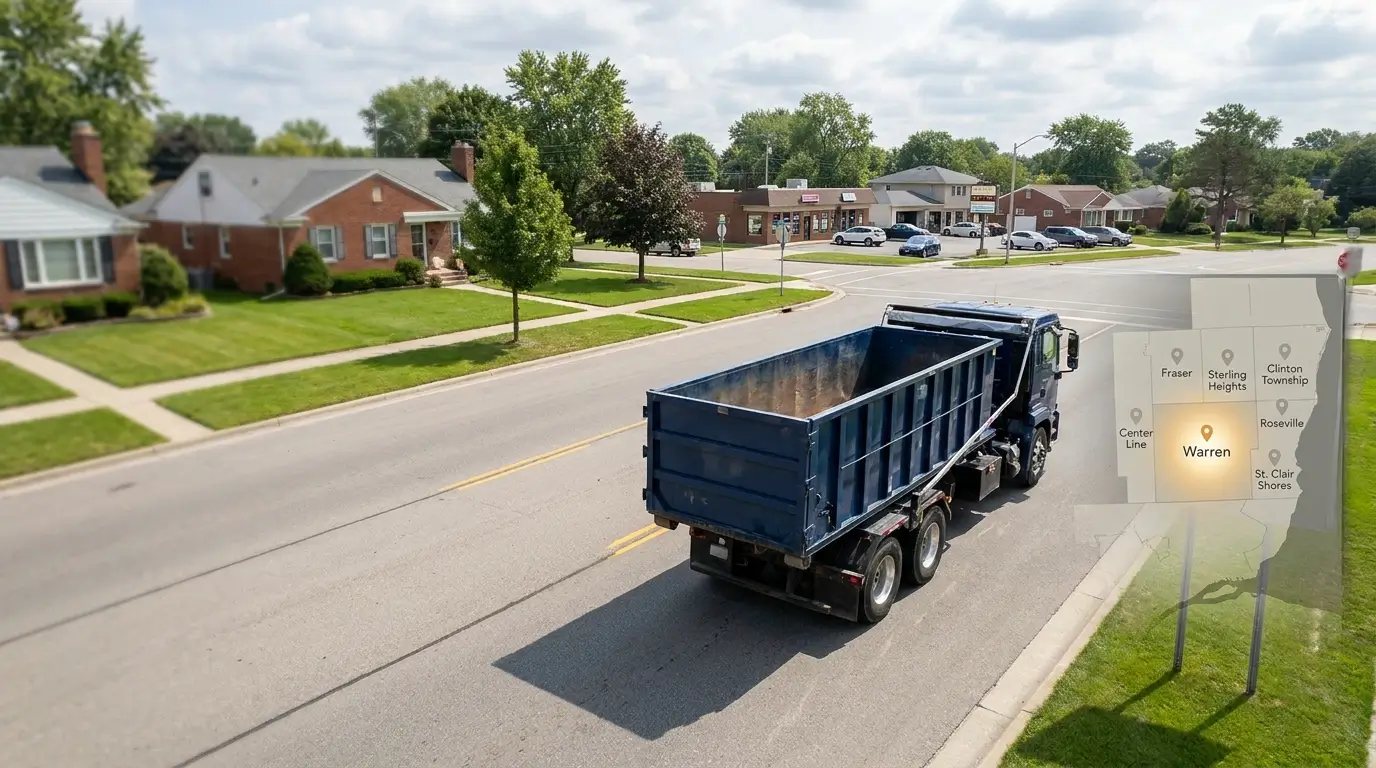
If your property is in Warren or a nearby community such as Center Line, Madison Heights, Royal Oak, Clawson, Fraser, or St. Clair Shores, confirm that the provider serves your address and can deliver the selected container.
Warren Dumpster Rental helps connect customers with independent dumpster rental providers serving Warren, Michigan, and nearby communities where coverage is available. The provider you are matched with handles availability, rental arrangements, pricing, and billing. Container sizes, accepted materials, weight allowances, and delivery requirements depend on the individual provider.
Frequently Asked Questions
Is a 20-yard dumpster big enough for a home remodel?
A 20-yard dumpster can be suitable for many single-floor remodeling projects, including kitchen updates, bathroom renovations, and flooring removal. The right size depends on the number of rooms, the amount of demolition, and the type of debris.
Is a 30-yard dumpster better for a whole-house cleanout?
A 30-yard dumpster is often a better starting point for a large whole-house cleanout because it provides 50% more volume than a 20-yard container. The actual requirement depends on the property’s contents and the amount of furniture, appliances, and household waste being removed.
How many pickup-truck loads fit in a 20-yard dumpster?
Capacity estimates vary by provider and pickup-truck size. Dumpsters.com estimates that its 20-yard container holds approximately six pickup-truck loads. Treat this as a planning estimate rather than an exact measurement.
How many pickup-truck loads fit in a 30-yard dumpster?
Dumpsters.com estimates that its 30-yard container holds approximately nine pickup-truck loads. Actual capacity depends on how the waste is loaded and the dimensions of the pickup truck used for comparison.
Is a 30-yard dumpster too big for a residential driveway?
Not necessarily. Many properties can accommodate a 30-yard dumpster, but available driveway length, width, overhead clearance, and truck access must be checked before delivery. Ask the provider for the exact container dimensions and delivery requirements.
Does a 30-yard dumpster have a higher weight limit than a 20-yard dumpster?
Not automatically. Each rental has a specified weight allowance, and the larger container does not remove truck transportation limits. Compare the included weight allowance for both sizes before making a decision.
Can I put concrete or dirt in a 20-yard or 30-yard dumpster?
It depends on the provider’s material restrictions and weight requirements. Concrete and dirt are dense materials that can exceed a container’s weight allowance before it is full. Ask whether a dedicated heavy-material container is required.
Is it cheaper to rent a 20-yard dumpster twice instead of one 30-yard dumpster?
Not necessarily. Two smaller rentals can involve additional delivery, pickup, disposal, or scheduling costs. Compare the complete quotes, including weight allowances and extra-haul charges, before deciding.
How much does a 20-yard dumpster cost in Warren, MI?
The price depends on the provider, rental period, included weight, material type, and delivery location. Local published pricing ranges are useful for initial planning, but they should not be treated as a guaranteed quote. Request a current price for your project.
How much does a 30-yard dumpster cost in Warren, MI?
A 30-yard dumpster may cost more than a 20-yard option because it provides additional capacity. However, the final price depends on the provider’s rental terms, weight allowance, disposal requirements, and delivery conditions. Compare written quotes before booking.
Should I choose the bigger dumpster if I am unsure?
A larger container can be a sensible choice when your project is likely to exceed the smaller container’s volume. However, consider the additional rental cost, driveway space, and weight restrictions first. If your debris is heavy, a larger container may not solve the problem.
Final Thoughts
Choosing between a 20-yard and 30-yard dumpster comes down to the amount of debris your project will produce, the type of material being discarded, and the space available for delivery.
A 20-yard dumpster is often a practical option for single-floor remodels, large garage cleanouts, and defined renovation projects. A 30-yard dumpster is generally better suited to whole-house cleanouts, multi-room renovations, and larger construction jobs.
Before making a decision, confirm the container dimensions, included weight allowance, rental period, material restrictions, and delivery clearance requirements. A little planning can help prevent an undersized container, unexpected overage charges, and unnecessary rental costs.